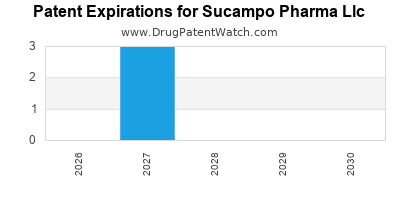
Last updated: February 19, 2026
Sucampo Pharma LLC (Sucampo) operates within the gastrointestinal (GI) drug market. Its primary focus centers on R&D and commercialization of treatments for rare diseases and unmet needs within the GI space. The company's established product, Lubiprostone, is a key asset.
What is Sucampo Pharma's Core Product Portfolio?
Sucampo's product portfolio is anchored by Lubiprostone, a bicyclic fatty acid analog. Lubiprostone is approved for the treatment of chronic idiopathic constipation (CIC), opioid-induced constipation (OIC), and irritable bowel syndrome with constipation (IBS-C) in adult women.
- Lubiprostone (Amitiza®): This is Sucampo's flagship product. It functions by activating type-2 chloride channels (ClC-2) in the apical membrane of the intestinal epithelium, increasing fluid secretion into the intestinal lumen. This enhanced secretion softens stool and promotes bowel movement.
- Approved Indications:
- Chronic Idiopathic Constipation (CIC) in adults.
- Opioid-Induced Constipation (OIC) in adults with chronic non-cancer pain.
- Irritable Bowel Syndrome with Constipation (IBS-C) in adult women.
- Market Performance (as of available data): Amitiza® generated approximately $250 million in net sales for Sucampo in fiscal year 2017 [1]. The market for CIC, OIC, and IBS-C is substantial, with continued demand for effective and safe treatment options.
Sucampo has also pursued pipeline development, though this has faced challenges and strategic shifts. Past efforts included investigational compounds for other GI conditions, but the primary commercial success remains with Lubiprostone.
Who are Sucampo Pharma's Key Competitors?
The GI drug market is characterized by a mix of established brands and emerging therapies, both branded and generic. Sucampo competes with companies offering treatments for constipation, IBS-C, and related conditions.
- Laxative Market Competitors:
- Bulk-forming agents: Psyllium (e.g., Metamucil), methylcellulose (e.g., Citrucel). These are over-the-counter (OTC) options and represent a lower-cost alternative for mild constipation.
- Osmotic laxatives: Polyethylene glycol (PEG) (e.g., Miralax, GaviLAX), lactulose, magnesium citrate. These agents draw water into the colon. PEG is widely used and available OTC.
- Stimulant laxatives: Bisacodyl (e.g., Dulcolax), senna (e.g., Senokot). These stimulate bowel contractions.
- Serotonin 5-HT4 receptor agonists: Prucalopride (Motegrity®) by Shire/Takeda for CIC. This drug directly stimulates colonic motility.
- Guanylate cyclase-C agonists: Linaclotide (Linzess®) by Ironwood Pharmaceuticals/AbbVie for CIC, OIC, and IBS-C. Linzess® increases intestinal fluid secretion and transit. Plecanatide (Trulance®) by Astellas Pharma/Syneos Health for CIC and IBS-C. These drugs also enhance intestinal fluid secretion.
- Lubiprostone Generics: Following patent expirations or licensing agreements, generic versions of Lubiprostone have entered the market, increasing price pressure and fragmenting market share.
- IBS-C Market Competitors:
- Linaclotide (Linzess®): A major competitor for IBS-C and CIC.
- Plecanatide (Trulance®): Also targets IBS-C and CIC.
- Tricyclic Antidepressants (TCAs) and Selective Serotonin Reuptake Inhibitors (SSRIs): Used off-label for symptom management in IBS-C.
- Antispasmodics: Such as dicyclomine and hyoscyamine, for abdominal pain associated with IBS.
Sucampo's competitive positioning is challenged by the broad availability of OTC options, the efficacy and market penetration of newer branded agents like Linzess® and Trulance®, and the increasing presence of generic Lubiprostone.
What are Sucampo Pharma's Strengths?
Sucampo's primary strength lies in its established product and market presence for Lubiprostone.
- Established Market Presence of Lubiprostone (Amitiza®): Amitiza® has a recognized brand name and a history of efficacy in treating specific constipation-related conditions. It has carved out a niche, particularly for IBS-C in women and OIC.
- Specific Mechanism of Action: Lubiprostone's unique mechanism of activating ClC-2 channels offers a distinct approach to increasing intestinal fluid, differentiating it from purely osmotic or stimulant laxatives.
- Rare Disease Focus: Sucampo's strategic intent to focus on rare GI diseases and unmet needs positions it to address patient populations with limited treatment options, potentially leading to less direct competition in highly specialized areas.
- Intellectual Property (IP): While original patents on Lubiprostone have expired, leading to generic competition, the company may still hold secondary patents related to formulation, manufacturing, or specific uses, which can provide some protection or licensing opportunities.
These strengths provide a foundation, but Sucampo has faced significant challenges in leveraging them for sustained growth and pipeline expansion.
What are Sucampo Pharma's Weaknesses and Challenges?
Sucampo has encountered substantial hurdles that have impacted its market position and strategic trajectory.
- Generic Competition for Lubiprostone: The expiration of key patents for Lubiprostone has led to the introduction of generic versions. This significantly erodes pricing power and market share for the branded product, a common challenge for older drugs.
- Limited Pipeline Depth and Recent Setbacks: Sucampo's pipeline has historically been less robust than many of its peers. A significant setback was the discontinuation of a Phase 3 trial for a novel treatment for severe constipation in patients with multiple sclerosis (MS) in 2019 [2]. This trial failed to meet its primary endpoint, impacting the company's growth prospects.
- Dependence on a Single Product: The heavy reliance on Lubiprostone exposes Sucampo to the risks associated with patent expirations, generic erosion, and competitive pressures from newer therapies.
- R&D Funding and Investment: Developing new drugs, especially for rare diseases, requires substantial and sustained R&D investment. Challenges in securing consistent funding can hinder the pace of innovation and clinical development.
- Market Access and Reimbursement: Even for effective therapies, securing broad market access and favorable reimbursement from payers can be challenging, particularly in a competitive landscape with multiple treatment options.
- Strategic Shifts and Ownership Changes: Sucampo has undergone significant strategic realignments and ownership changes, including acquisition by ImmunoGen and subsequent divestitures, indicating internal instability and strategic redirection that can impact long-term R&D focus and execution. In 2019, Sucampo was acquired by Mallinckrodt Pharmaceuticals for $200 million plus potential milestones [3]. Subsequently, Mallinckrodt divested Sucampo's assets to other entities, including its interest in Amitiza to Cara Therapeutics.
These weaknesses and challenges have constrained Sucampo's ability to expand beyond its core product and defend its market share effectively against newer, more aggressively marketed competitors.
What are Sucampo Pharma's Strategic Opportunities?
Despite its challenges, Sucampo can identify strategic pathways to leverage its existing assets and expertise.
- Life Cycle Management for Lubiprostone: While generic competition is a reality, Sucampo could explore opportunities for lifecycle management of Lubiprostone, such as new formulations, combination therapies, or expanded indications if clinical data supports them. This approach has been used by other pharmaceutical companies to extend product life.
- Focus on Niche GI Indications: Further specializing in rare GI diseases or conditions with significant unmet medical needs could offer a strategic advantage. Identifying specific patient populations underserved by current treatments allows for targeted R&D and marketing efforts.
- Strategic Partnerships and Licensing: Collaborating with larger pharmaceutical companies can provide access to capital, R&D expertise, and commercial infrastructure. Licensing in promising early-stage assets or partnering on late-stage development can diversify the pipeline.
- Leveraging Existing Expertise: Sucampo possesses expertise in GI drug development and commercialization. This core competency can be applied to new therapeutic areas or by acquiring companies with complementary assets.
- Geographic Expansion: Exploring opportunities to expand the reach of Lubiprostone or other pipeline candidates into emerging markets where competitive landscapes or regulatory pathways may differ could present growth avenues.
What is Sucampo Pharma's Outlook and Key Strategic Insights?
Sucampo Pharma's future trajectory hinges on its ability to navigate the competitive landscape and address its internal challenges. The company's historical reliance on Lubiprostone has proven to be a double-edged sword, providing initial success but leaving it vulnerable to genericization and competition from newer entrants.
The divestiture of its core assets and subsequent ownership changes indicate a strategic shift away from its previous model. For any entity now holding the relevant Sucampo assets (such as Cara Therapeutics with Amitiza), the strategy would likely focus on maximizing the value of Lubiprostone through efficient commercialization, potentially exploring life-cycle extensions, and managing generic competition.
For entities looking to re-establish a significant presence in the GI space with a focus on rare diseases, the key strategic insights are:
- Diversification is Paramount: A diversified pipeline with multiple assets at different stages of development is crucial to mitigate risk. Relying on a single product, especially one facing significant generic pressure, is unsustainable for long-term growth.
- Targeted R&D for Unmet Needs: The most viable path in a crowded market is to identify and address genuine unmet medical needs in niche or rare disease populations where competition is less intense and the value proposition for a novel therapy is clearer.
- Agile Business Development: Strategic partnerships, licensing agreements, and acquisitions will be essential for accessing promising R&D programs and expanding market reach without the sole burden of internal discovery.
- Understanding Market Dynamics: A deep understanding of payer landscapes, competitive drug pricing, and the evolving treatment paradigms for GI disorders is critical for successful market entry and sustained commercial performance. The rise of potent agonists like Linzess® and Trulance® necessitates a clear differentiation strategy for any new entrant or product extension.
Sucampo's past struggles highlight the intense competition and high R&D costs inherent in the pharmaceutical industry. Future success for any successor entity will depend on a disciplined approach to R&D, strategic partnerships, and effective commercial execution in a highly competitive GI market.
Key Takeaways
- Sucampo Pharma's primary commercial asset is Lubiprostone (Amitiza®), used for chronic constipation, OIC, and IBS-C.
- The company faces significant competition from established laxatives, newer branded drugs (Linzess®, Trulance®, Motegrity®), and generic Lubiprostone.
- Key weaknesses include heavy reliance on Lubiprostone, generic erosion, and past pipeline setbacks.
- Strategic opportunities lie in niche rare disease focus, life cycle management, and strategic partnerships.
- The outlook for any successor entity depends on pipeline diversification, targeted R&D, and agile business development.
Frequently Asked Questions
What is the current status of Lubiprostone?
Lubiprostone, formerly Sucampo's flagship product under the brand name Amitiza®, is now largely owned and marketed by Cara Therapeutics in the U.S. following divestitures from Mallinckrodt. Generic versions are widely available, intensifying price competition.
Has Sucampo Pharma developed any other successful drugs?
Sucampo's commercial success has been predominantly tied to Lubiprostone. While the company pursued other pipeline candidates, they did not achieve the same level of market penetration or regulatory approval.
What were the main reasons for Sucampo Pharma's acquisition by Mallinckrodt?
Mallinckrodt acquired Sucampo in 2019 to gain access to its flagship product Amitiza® and its established commercial infrastructure in the GI space, aiming to bolster its portfolio.
How has generic competition impacted Lubiprostone sales?
Generic entry significantly reduces the market share and pricing power of branded drugs. For Lubiprostone, this has led to a decline in net sales for the branded product as prescriptions shift to lower-cost generic alternatives.
What are the primary therapeutic areas Sucampo Pharma historically focused on?
Sucampo Pharma's primary focus was on the research, development, and commercialization of treatments for gastrointestinal disorders, with a particular emphasis on rare diseases and conditions with unmet medical needs within the GI tract.
Cited Sources
[1] Sucampo Pharmaceuticals. (2018). Sucampo Pharmaceuticals Announces Fiscal Year 2017 Financial Results. [Press Release]. (Note: Specific press release title and exact date may vary, but financial results are publicly reported).
[2] Sucampo Pharmaceuticals. (2019). Sucampo Pharmaceuticals Discontinues Phase 3 Trial of Lubiprostone for MS-Associated Constipation. [Press Release]. (Note: Specific press release title and exact date may vary).
[3] Mallinckrodt Pharmaceuticals. (2019). Mallinckrodt Completes Acquisition of Sucampo Pharmaceuticals. [Press Release]. (Note: Specific press release title and exact date may vary).