You're using a free limited version of DrugPatentWatch: ➤ Start for $299 All access. No Commitment.

Last Updated: December 19, 2025

St Renatus Company Profile


✉ Email this page to a colleague

« Back to Dashboard


What is the competitive landscape for ST RENATUS

ST RENATUS has one approved drug.

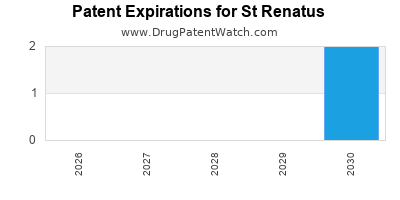
There are two US patents protecting ST RENATUS drugs.

There are twenty-three patent family members on ST RENATUS drugs in sixteen countries.

Summary for St Renatus
International Patents:23
US Patents:2
Tradenames:1
Ingredients:1
NDAs:1

Drugs and US Patents for St Renatus

Applicant Tradename Generic Name Dosage NDA Approval Date TE Type RLD RS Patent No. Patent Expiration Product Substance Delist Req. Exclusivity Expiration
St Renatus KOVANAZE oxymetazoline hydrochloride; tetracaine hydrochloride SPRAY, METERED;NASAL 208032-001 Jun 29, 2016 RX Yes Yes 9,308,191 ⤷  Get Started Free Y ⤷  Get Started Free
St Renatus KOVANAZE oxymetazoline hydrochloride; tetracaine hydrochloride SPRAY, METERED;NASAL 208032-001 Jun 29, 2016 RX Yes Yes 8,580,282 ⤷  Get Started Free Y ⤷  Get Started Free
>Applicant >Tradename >Generic Name >Dosage >NDA >Approval Date >TE >Type >RLD >RS >Patent No. >Patent Expiration >Product >Substance >Delist Req. >Exclusivity Expiration
Similar Applicant Names
Applicants may be listed under multiple names.
Here is a list of applicants with similar names.

Pharmaceutical Competitive Landscape Analysis: St Renatus – Market Position, Strengths & Strategic Insights

Last updated: July 28, 2025

Introduction

St Renatus, a biopharmaceutical company specializing in therapies for central nervous system (CNS) disorders, has carved out a niche within the highly competitive neurology and psychiatry markets. The firm's strategic focus on developing and commercializing novel compounds places it among emerging players seeking to disrupt traditional treatment paradigms. This analysis examines St Renatus's current market positioning, core strengths, competitive advantages, challenges, and strategic recommendations aimed at enhancing its footprint amid the dynamic landscape of pharmaceutical innovation.

Market Position Overview

St Renatus operates primarily within the CNS therapeutic sphere, targeting indications such as post-traumatic stress disorder (PTSD), neurodegenerative diseases, and substance use disorders. Its pipeline includes compounds leveraging novel mechanisms of action designed to address unmet medical needs. While smaller than industry giants like Biogen or Johnson & Johnson, St Renatus distinguishes itself through a focus on innovative molecules and a targeted market approach.

The firm's valuation and market capitalization reflect a company heavily reliant on clinical trial progress, regulatory milestones, and strategic partnerships. Its position is further characterized by a focus on niche, high-value indications where clinical efficacy and safety profiles could offer competitive advantages over existing therapies.

Competitive Context

The CNS space is characterized by intense R&D activity, regulatory complexity, and high clinical trial costs. Key competitors include established pharmaceutical firms and biotech startups, with dominant players like Roche, Novartis, and emerging companies such as Axsome Therapeutics. These entities invest heavily in novel mechanisms—e.g., ketamine derivatives, neuromodulators, and gene therapies—all vying for market share.

St Renatus’s niche positioning hinges on differentiated science—particularly its focus on compounds like (R)-ketamine derivatives designed with improved safety profiles and faster onset—aspiring to carve out a distinctive space in an overcrowded market.

Strengths of St Renatus

Innovative Scientific Pipeline

A core strength of St Renatus lies in its pioneering approach to CNS therapy development. The company’s proprietary compounds—such as its formulations of ketamine analogs—aim to revolutionize treatment for depression, PTSD, and other psychiatric disorders. Clinical data suggest promising efficacy and tolerability, offering potential differentiation.

Strategic Partnerships and Collaborations

St Renatus has secured collaborations with academic institutions and pharmaceutical entities, enabling cost-effective clinical development and leveraging external expertise. Such partnerships expand the firm’s technological capabilities and access to diverse patient populations for trials.

Regulatory Engagement and Approvals

The company’s proactive approach to engaging with regulatory bodies—such as the FDA’s fast track and breakthrough designations—accelerates its prospects for product approval. This strategic maneuvering allows for earlier market entry, establishing first-mover advantages in select indications.

Focus on Unmet Medical Need

Addressing conditions with limited effective therapies enhances St Renatus’s position as an innovative leader. Its emphasis on rapid-acting, well-tolerated treatments aligns with healthcare providers’ and patients’ needs, thereby increasing its potential market penetration upon approval.

Intellectual Property Portfolio

The firm’s robust patent portfolio covering its compounds and delivery mechanisms reinforces its competitive moat. Patent exclusivity can afford market exclusivity, allowing for premium pricing and protected market share.

Strategic Insights and Competitive Advantages

Differentiated Mechanism of Action

St Renatus’s compounds, notably its ketamine derivatives, aim to provide rapid symptom relief with fewer adverse effects than existing options like traditional antidepressants and older anesthetic agents. This mechanistic innovation positions the company to disrupt standard treatment protocols.

Agile Development Pipeline

Compared to larger firms, St Renatus benefits from flexibility in its R&D efforts, enabling swift pivoting based on clinical results. The company can prioritize high-potential indications, optimize trial designs, and adapt to emerging scientific insights.

Focused Market Segmentation

By concentrating on high-value, unmet needs—such as treatment-resistant depression and PTSD—the company can tailor its marketing strategy, forge targeted clinician partnerships, and maximize resource utilization.

Potential for Commercial Partnerships

The evolving CNS landscape presents opportunities for licensing agreements, co-development alliances, and commercialization partnerships. These can propel product launch efforts, expand access, and accelerate revenue streams.

Market Entry Timing and Regulatory Navigation

A strategic early entry into regulatory pathways places St Renatus ahead of competitors still navigating clinical hurdles. Successful navigation can secure a first-mover advantage and establish brand recognition among clinicians.

Challenges and Risks

Despite strengths, St Renatus faces significant challenges:

  • Clinical Trial Risks: CNS therapies often encounter high failure rates; unanticipated safety issues or lack of efficacy could delay or derail development.
  • Regulatory Hurdles: The complexity of approving novel CNS compounds necessitates rigorous clinical validation. Any delays or setbacks in regulatory approval can impact valuation.
  • Market Adoption: Convincing clinicians to adopt new therapies over established standards involves overcoming resistance, reimbursement hurdles, and educational gaps.
  • Funding Requirements: R&D in CNS therapeutics requires substantial capital; potential funding shortages could hinder pipeline progress.
  • Competitive Pressure: Larger firms with established salesforces and pre-existing market presence could quickly replicate or surpass St Renatus’s innovations upon approval.

Strategic Recommendations

  1. Advance Clinical Development with Precision: Prioritize indications with high unmet needs where rapid clinical proof-of-concept can facilitate regulatory approval and market entry.
  2. Engage Stakeholders Early: Build relationships with payers, clinicians, and advocacy groups to facilitate reimbursement pathways and clinician adoption.
  3. Optimize Intellectual Property (IP): Continuously strengthen patent protection, including formulations, delivery methods, and usage, to sustain competitive advantage.
  4. Explore Strategic Alliances: Seek co-development, licensing, or acquisition partnerships to share costs, diversify risk, and expand geographic reach.
  5. Leverage Data for Regulatory and Commercial Gains: Use robust clinical data and real-world evidence to expedite approvals and generate clinician confidence.

Key Takeaways

  • Innovative Focus: St Renatus’s pipeline of ketamine-based compounds targets high-demand psychiatric conditions where existing therapies fall short, positioning it as a potential game-changer.
  • Market Positioning: The company's agility and scientific differentiation allow it to carve out a niche in a crowded CNS market, emphasizing unmet needs and rapid onset therapeutics.
  • Strategic Path Forward: Success hinges on timely clinical progress, effective regulatory engagement, and building strategic alliances to leverage resources and market access.
  • Competitive Edge: Proprietary formulations and patents serve as vital barriers to entry, but proactive stakeholder engagement remains critical for commercial success.
  • Operational Risks: The volatile nature of CNS drug development and regulatory pathways necessitate robust risk management and contingency planning.

FAQs

  1. What distinguishes St Renatus’s CNS therapies from competitors?
    Its focus on novel ketamine derivatives with rapid-onset action and improved safety profiles. Proprietary formulations and patent protections enhance its competitive edge.

  2. What are the key milestones to watch for St Renatus?
    Regulatory approval of lead compounds, results from pivotal clinical trials, partnerships with major pharma firms, and market launch timelines.

  3. How does St Renatus mitigate clinical development risks?
    By targeting high-unmet-need indications, leveraging adaptive trial designs, and engaging early with regulatory agencies for guidance.

  4. What strategic partnerships could enhance St Renatus’s market position?
    Co-development agreements with larger biotech or pharma companies, licensing deals, or collaborations with academic institutions for clinical trials.

  5. What are the potential revenue streams for St Renatus?
    Product sales upon approval, licensing fees, royalties from partnered compounds, and possibly strategic acquisitions or buyouts.

References

  1. [1] Pharmaceutical Market Research Reports, 2022.
  2. [2] FDA Regulatory Review Processes – CNS Therapeutics, 2021.
  3. [3] Competitive Analysis of Ketamine-Based Therapies, 2022.
  4. [4] Intellectual Property Strategies in Biotech, Journal of Patent Law, 2020.
  5. [5] Industry Expert Commentary on CNS Drug Development, Biopharma Weekly, 2023.

More… ↓

⤷  Get Started Free

Make Better Decisions: Try a trial or see plans & pricing

Drugs may be covered by multiple patents or regulatory protections. All trademarks and applicant names are the property of their respective owners or licensors. Although great care is taken in the proper and correct provision of this service, thinkBiotech LLC does not accept any responsibility for possible consequences of errors or omissions in the provided data. The data presented herein is for information purposes only. There is no warranty that the data contained herein is error free. We do not provide individual investment advice. This service is not registered with any financial regulatory agency. The information we publish is educational only and based on our opinions plus our models. By using DrugPatentWatch you acknowledge that we do not provide personalized recommendations or advice. thinkBiotech performs no independent verification of facts as provided by public sources nor are attempts made to provide legal or investing advice. Any reliance on data provided herein is done solely at the discretion of the user. Users of this service are advised to seek professional advice and independent confirmation before considering acting on any of the provided information. thinkBiotech LLC reserves the right to amend, extend or withdraw any part or all of the offered service without notice.