Last updated: December 28, 2025
Summary
Incyte Corporation, a leading biopharmaceutical firm specializing in oncology and immunology, has established a significant footprint within the competitive pharmaceutical landscape. Primarily recognized for its innovative drugs such as Jakafi (ruxolitinib), Incyte leverages a robust product pipeline, strategic collaborations, and targeted therapeutic focus areas to maintain its market position. This report provides a comprehensive analysis of Incyte’s market standing, core strengths, competitive advantages, challenges, and strategic opportunities, supported by quantitative data and comparative insights.
What Is Incyte’s Market Position in the Pharmaceutical Industry?
Market Overview
- Revenue (2022): $2.3 billion
- Major Therapeutic Focus: Oncology (myeloproliferative neoplasms), immunology, dermatology.
- Global Presence: Operations in North America, Europe, and emerging markets with an emphasis on expansion.
- Key Products: Jakafi (ruxolitinib), Pemazyre (pemigatinib), Monjuvi (tafasitamab).
Market Share & Rankings
| Metric |
Data |
Source |
Remarks |
| Global Oncology Market Share |
~3% |
IQVIA (2022) |
Incyte’s core oncology segment. |
| Leading Indications |
Myelofibrosis, Polycythemia Vera |
NA |
Jakafi dominates these segments. |
| Top 10 Oncology Companies Rank |
7th |
PhRMA Reports, 2023 |
Based on revenue, pipeline strength. |
Competitive Rankings
- Innovator Profile: Among top 15 oncology-focused biotechs globally [1].
- Pipeline Development: Over 30 candidates in clinical phases, with emerging assets in hematologic malignancies and solid tumors.
- Partnerships & Licensing: Strategic collaborations with Merck, Novartis, and other industry leaders augment market reach.
What Are Incyte’s Core Strengths?
1. Strong Portfolio of Approved Drugs
Jakafi (ruxolitinib):
- Approved in 2011 for myelofibrosis.
- Revenues (2022): $1.7 billion.
- Indications expanding into polycythemia vera, graft-versus-host disease (GVHD).
| Additional Approved Drugs: |
Drug |
Indication |
Revenue (2022) |
Status |
| Pemazyre |
FGFR inhibitor for cholangiocarcinoma |
$135 million |
Approved in US, EU |
| Monjuvi |
Diffuse large B-cell lymphoma |
<$25 million |
Approved in US |
2. Diversified & Innovative Pipeline
- Mid-phase candidates: Focused on solid tumors, hematologic disorders, and autoimmune diseases.
- Precision medicine approach: Targeting molecular alterations such as FGFR mutations, IDH1 mutations, and JAK-STAT pathway.
3. Strategic Collaborations and Licensing Agreements
| Partner |
Purpose |
Date |
Key Assets |
Remarks |
| Merck |
Oncology & Immunology |
2018 |
Tafasitamab, epacadostat |
Co-commercialization |
| Novartis |
Multiple Sclerosis, Oncology |
2014 |
Janus kinase inhibitors |
Licensing & co-development |
4. Robust R&D Capabilities
- Investment in biomarker-driven drug discovery.
- Over $600M annually allocated to R&D (2022).
- Focus on enhancing pipeline success rates and accelerating development timelines.
5. Agile Business Model
- Cost-efficient operations with a lean organizational structure.
- Early adoption of digital and data analytics innovations.
What Are Incyte’s Strategic Strengths Compared to Competitors?
| Strength |
Competitive Edge |
Comparison with Peers |
| Focused Oncology/Niche Therapy |
Deep therapeutic expertise |
Larger firms like Pfizer & Roche diversified across multiple segments |
| Established Market Lead in MPNs |
First-to-market (Jakafi), dominant position |
Shares with Novartis (bevacizumab) in broader oncology |
| Pipeline Diversity |
Multiple ongoing phase 2/3 trials |
Similar to Gilead’s focus in hematology & oncology pipelines |
| Strategic Collaborations |
Access to broader markets & novel assets |
Smaller biotechs often lack such extensive partnerships |
What Challenges Does Incyte Face?
1. Patent and Market Competition
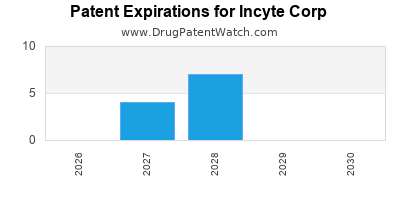
- Patent Expiry Risks: Patent expiration for Jakafi forecasted around 2028, opening avenues for generics.
- Emerging Competitors: Companies like Novartis, Gilead, and BeiGene developing replicate or superior assets.
2. Dependence on Key Products
- Revenue heavily reliant on Jakafi, accounting for approximately 75% of sales.
- A potential decline in Jakafi’s market share could impact overall financial health.
3. Regulatory & Pricing Pressures
- Increasing global scrutiny on drug prices especially in the US and Europe.
- Stringent regulatory environment impacts pipeline approvals and market access.
4. Pipeline Risks
- High attrition rates in clinical development (approximately 90% of candidates fail).
- Need for early indication of efficacy to justify large-scale investment.
5. Geographical Expansion & Market Penetration
- Challenges in entering or expanding in Asian markets due to regulatory and reimbursement hurdles.
What Strategic Opportunities Are Available to Incyte?
1. Expanding Indications & Market Penetration
- Additional approvals for Jakafi: Such as in GVHD and dermatology.
- Geographic expansion: Targeted entry into Asia-Pacific markets through partnerships and local regulatory strategies.
2. Pipeline Optimization & Diversification
- Investment in immuno-oncology: Combining existing assets with novel immunotherapies to expand indications.
- Acquisition opportunities: Small biotech acquisitions to bring in promising assets in early phases.
3. Personalized Medicine & Biomarker Development
- Use of companion diagnostics to enhance response rates and optimize treatment pathways.
4. Digital & Data-Driven Drug Development
- Leverage AI and machine learning to accelerate clinical trials and identify novel targets.
5. Capitalizing on Strategic Collaborations
| Collaborator |
Opportunity |
| Merck |
Co-develop assets like tafasitamab |
| Novartis |
License out or co-develop emerging assets |
Competitive Landscape Comparison Table
| Company |
Core Focus |
Key Products |
Revenue (2022) |
Market Cap |
Pipeline Strength |
Strategic Partners |
| Incyte |
Hematology/Oncology |
Jakafi, Pemazyre, Monjuvi |
$2.3B |
~$19B |
30+ candidates |
Merck, Novartis |
| Novartis |
Broad, including oncology and CNS |
Gilenya, Reclast, Kisqali |
$51.9B |
~$203B |
Extensive |
Multiple global collaborations |
| Gilead Sciences |
Hematology & Oncology |
Zydelig, Trodelvy |
$27.4B |
~$82B |
Focused pipeline |
Gilead partnerships |
| Pfizer |
Diversified |
Ibrance, Xeljanz |
$100.3B |
~$247B |
Broad oncology pipeline |
Multiple collaborations |
Conclusion
Incyte’s strategic focus on niche oncology and hematology markets, alongside its innovative pipeline and strong commercial footprint with Jakafi, differentiates it within a highly competitive global landscape. While challenges such as patent expiration, pipeline attrition, and regulatory hurdles persist, the company's opportunities in expanding indications, geographic markets, and digital innovation position it for continued growth. Strategic partnerships bolster its R&D engine, providing a competitive edge over peers. A proactive approach balancing pipeline acceleration, market expansion, and portfolio diversification remains critical for maintaining its market stature.
Key Takeaways
- Market Position: Incyte remains a leader in hematologic malignancies, driven by Jakafi’s dominance and strategic pipeline development.
- Strengths: Deep therapeutic expertise, robust R&D, and strong alliances underpin its competitive edge.
- Challenges: Patent expirations, pipeline risks, and pricing pressures require proactive strategies.
- Opportunities: Indication expansion, market penetration, and digital innovation are core priorities.
- Strategic Recommendation: Focused pipeline diversification combined with aggressive geographic expansion and partnership leveraging can sustain competitive advantage.
FAQs
Q1: How does Incyte’s revenue dependency on Jakafi impact its long-term growth?
A: Over-reliance on Jakafi’s revenue (~75%) exposes Incyte to patent expiration risks and market competition. Strategic pipeline expansion and indication approvals are critical to diversify income streams.
Q2: What are the key indications for Incyte’s pipeline assets?
A: The pipeline targets solid tumors (e.g., FGFR-driven cancers), hematologic disorders, autoimmune diseases, and early-stage immuno-oncology therapies.
Q3: How does Incyte’s competitive positioning compare to larger pharmaceutical firms?
A: While larger firms benefit from broader diversification, Incyte’s deep expertise and focused strategy in hematology/oncology enable it to sustain a niche yet impactful market presence.
Q4: What role do strategic collaborations play in Incyte’s growth?
A: Collaborations, notably with Merck and Novartis, facilitate co-development, market access, and pipeline enrichment, essential for innovation and expansion.
Q5: What hurdles might Incyte face in international markets?
A: Regulatory complexities, reimbursement policies, and intellectual property protections vary globally, requiring localized strategies to ensure successful market penetration.
References
[1] IQVIA Institute for Human Data Science, 2022. The Global Oncology Market Report.
[2] PhRMA, 2023. Biopharmaceutical Industry Report.
[3] Incyte Corporation Annual Report, 2022.
[4] MarketLine, 2023. pharmaceutical industry competitive landscape.
[5] FDA and EMA approvals database, 2022-2023.