You're using a free limited version of DrugPatentWatch: Upgrade for Complete Access

Last Updated: December 19, 2025

Geron Company Profile


✉ Email this page to a colleague

« Back to Dashboard


Summary for Geron
International Patents:151
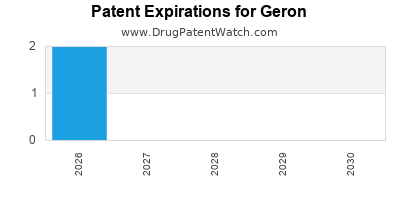
US Patents:6
Tradenames:1
Ingredients:1
NDAs:1

Drugs and US Patents for Geron

Applicant Tradename Generic Name Dosage NDA Approval Date TE Type RLD RS Patent No. Patent Expiration Product Substance Delist Req. Exclusivity Expiration
Geron RYTELO imetelstat sodium POWDER;INTRAVENOUS 217779-001 Jun 6, 2024 RX Yes Yes 9,375,485 ⤷  Get Started Free ⤷  Get Started Free
Geron RYTELO imetelstat sodium POWDER;INTRAVENOUS 217779-002 Jun 6, 2024 RX Yes Yes 12,171,778 ⤷  Get Started Free ⤷  Get Started Free
Geron RYTELO imetelstat sodium POWDER;INTRAVENOUS 217779-001 Jun 6, 2024 RX Yes Yes 12,442,000 ⤷  Get Started Free ⤷  Get Started Free
Geron RYTELO imetelstat sodium POWDER;INTRAVENOUS 217779-002 Jun 6, 2024 RX Yes Yes 9,375,485 ⤷  Get Started Free ⤷  Get Started Free
>Applicant >Tradename >Generic Name >Dosage >NDA >Approval Date >TE >Type >RLD >RS >Patent No. >Patent Expiration >Product >Substance >Delist Req. >Exclusivity Expiration

Supplementary Protection Certificates for Geron Drugs

Patent Number Supplementary Protection Certificate SPC Country SPC Expiration SPC Description
3456333 PA2025517 Lithuania ⤷  Get Started Free PRODUCT NAME: IMETELSTATAS ARBA JO FARMACISKAI PRIIMTINA DRUSKA; REGISTRATION NO/DATE: EU/1/24/1894 20250307
3456333 C20250019 Finland ⤷  Get Started Free
3456333 CR 2025 00016 Denmark ⤷  Get Started Free PRODUCT NAME: IMETELSTAT, ELLER ET FARMACEUTISK ACCEPTABELT SALT DERAF; REG. NO/DATE: EU/1/24/1894 20250311
3456333 2025C/518 Belgium ⤷  Get Started Free PRODUCT NAME: IMETELSTAT, DESGEWENST IN DE VORM VAN EEN FARMACEUTISCH AANVAARDBAAR ZOUT; AUTHORISATION NUMBER AND DATE: EU/1/24/1894 20250311
>Patent Number >Supplementary Protection Certificate >SPC Country >SPC Expiration >SPC Description
Similar Applicant Names
Applicants may be listed under multiple names.
Here is a list of applicants with similar names.

Pharmaceutical Competitive Landscape Analysis: Geron – Market Position, Strengths & Strategic Insights

Last updated: July 30, 2025

Introduction

Geron Corporation stands as a pioneering biotech entity within the oncology and regenerative medicine sectors. Established in 1990, Geron has carved a niche through innovative approaches aimed at addressing unmet medical needs, particularly in hematologic cancers and cellular therapies. As the pharmaceutical landscape becomes increasingly crowded, understanding Geron’s market position, core strengths, and strategic direction is vital for investors, partners, and industry stakeholders seeking perspectives on its future trajectory.

Market Position and Industry Context

Geron operates predominantly within the hematology-focused therapeutics and regenerative medicine sectors. While not as large as pharmaceutical giants, the company's emphasis on novel mechanisms—such as telomerase inhibition and cell therapy—positions it uniquely. As of 2023, Geron’s progress has been shaped by pivotal clinical trials and strategic partnerships, exemplified by collaborations with leading industry players like Janssen Pharmaceuticals and Pfizer.

The overarching market for telomerase inhibitors and cell therapies shows robust growth, driven by the rising prevalence of cancer and degenerative diseases. According to Market Research Future, the global regenerative medicine market is projected to reach $38 billion by 2025, registering a CAGR of approximately 23% over the forecast period [1]. Geron’s focus aligns with these trends, especially with its flagship products targeting myelofibrosis and potentially expanding into broader oncology indications.

Core Strengths

1. Proprietary Scientific Platform

Geron’s intellectual property is anchored in its telomerase inhibition technology, notably targeting telomerase reverse transcriptase (hTERT)—a hallmark of cancer cell immortality. The company's lead candidate, imetelstat, exemplifies this approach, demonstrating potential in treating myelofibrosis and other hematological malignancies. The proprietary nature of this mechanism offers a competitive edge and barriers to entry for rivals seeking similar therapeutic targets.

2. Clinical Experience and Data Portfolio

Geron’s extensive clinical trials, especially Phase 2 studies, have established a foundation for regulatory discussions and future development. The company’s recent trial data suggest promising efficacy signals in myelofibrosis, with potential for expanded indications such as other myeloproliferative neoplasms (MPNs) and solid tumors. Its commitment to rigorous clinical validation continues to bolster investor confidence.

3. Strategic Alliances and Partnerships

Collaborations with industry titans, including an exclusive license agreement with Janssen for imetelstat in myelofibrosis, enhance Geron’s resource base and market reach. These partnerships provide not only funding but also accelerate development timelines and facilitate access to global commercialization channels.

4. Focus on Unmet Medical Needs

Geron’s products target diseases with significant unmet medical needs, often with limited effective treatments. Such positioning enhances regulatory and reimbursement prospects, especially if clinical results confirm meaningful patient benefits.

5. Flexible Development Strategy

The company is adopting a nimble approach, exploring multiple indications and combination therapies. This diversification mitigates risk and opens multiple revenue pathways.

Strategic Challenges and Weaknesses

1. Reliance on a Single Lead Asset

Despite promising data, Geron’s reliance on imetelstat remains a vulnerability. Clinical development setbacks or regulatory delays could significantly impact its valuation and strategic outlook.

2. Limited Commercial Footprint

Geron’s small size and limited commercial infrastructure pose hurdles to scaling directly, necessitating partnerships for widespread market access. This dependence may influence pricing and reimbursement negotiations.

3. Competition from Larger Biotech/Pharma

Major players like Novartis and Celgene (acquired by Bristol-Myers Squibb) are advancing cellular therapies and hematologic treatments, which can overshadow Geron’s niche offerings. Competing technologies such as CAR-T and bispecific antibodies threaten to dilute market potential.

4. Clinical and Regulatory Risks

Given the innovative mechanism of action, regulatory approval hinges on definitive clinical evidence. The risk of trial failures, delays, or adverse events remains significant.

Market Opportunities and Strategic Insights

1. Expansion into Solid Tumors

While primarily focused on hematologic cancers, imetelstat’s mechanism suggests potential utility in solid tumors exhibiting telomerase overexpression. Expanding clinical exploration could unlock new markets and increase corporate valuation.

2. Combination Therapy Applications

Combining imetelstat with existing chemotherapies, targeted agents, or immune checkpoint inhibitors may enhance efficacy, opening avenues for synergistic regimens. This approach aligns with the industry trend toward personalized, combination treatments.

3. Broader Indication Portfolio

Geron’s platform could extend into regenerative applications such as tissue repair and degenerative diseases, although these require distinct development pathways. Diversification may buffer against risks associated with oncology indications.

4. Leveraging Strategic Partnerships

Further alliances with global pharma firms can facilitate accelerated development, market access, and manufacturing scale. Strategic investments in manufacturing capabilities could also provide cost advantages and supply chain resilience.

5. Navigating Regulatory Pathways

Active engagement with regulators, including potential Breakthrough Therapy Designations in the U.S., can accelerate approval processes. Robust dialogue on endpoints and trial design will be critical to mitigate development risks.

Competitive Landscape

Geron’s niche is characterized by a select constellation of competitors pursuing telomerase inhibition and cell therapy innovations. Key rivals include:

  • Imetelstat-focused competitors: Limited, with Geron leading in clinical development.
  • Cellular therapeutics providers: Novartis and Gilead/Spectrum Pharmaceuticals advancing CAR-T products.
  • Targeted small molecules and biologics: Emergent therapies targeting similar pathways but with different mechanisms.

While Geron’s proprietary telomerase platform offers differentiation, ongoing industry advances necessitate continuous innovation and strategic agility.

Regulatory and Market Access Outlook

The regulatory environment for novel mechanisms like telomerase inhibition remains cautiously optimistic, provided clinical efficacy and safety are demonstrated. In the U.S., a Breakthrough Therapy or Fast Track designation could expedite product approval. Globally, regions such as the EU and Japan exhibit progressive pathways for innovative cancer therapies.

Market access will hinge on demonstrating meaningful clinical benefits and positioning imetelstat within treatment paradigms, especially where unmet needs persist. Health economics and reimbursement negotiations will also shape commercialization success.

Key Takeaways

  • Geron’s strategic focus on telomerase inhibition positions it uniquely in the oncology biotech landscape, especially with its lead candidate, imetelstat.
  • Clinical advancements and strategic alliances have validated Geron’s potential, though overreliance on a single asset remains a risk.
  • Expanding indications, pursuing combination therapies, and fostering new partnerships are vital for maintaining growth momentum.
  • Competition from larger biotech entities and emerging therapies necessitates innovation and agile development strategies.
  • Regulatory engagement and market access strategies will significantly influence Geron’s ability to translate clinical success into commercial viability.

Conclusion

Geron stands at a strategic inflection point, combining innovative science with a targeted therapeutic approach. Its prospects depend heavily on clinical outcomes, strategic collaborations, and the evolution of the regulatory landscape. For investors and partners, understanding Geron’s distinctive position within the rapidly evolving biotech ecosystem offers opportunities for high-impact engagement, tempered by inherent developmental risks.


FAQs

Q1: What is Geron’s primary therapeutic focus?
A: Geron primarily focuses on telomerase inhibition in hematologic cancers, with its lead candidate imetelstat targeting myelofibrosis and other myeloproliferative neoplasms.

Q2: How does Geron differentiate itself from competitors?
A: Its proprietary telomerase inhibitor mechanism and extensive clinical data portfolio distinguish Geron in the oncology biotech space, with fewer direct rivals focusing on this pathway.

Q3: What are the key risks facing Geron?
A: Risks include clinical trial failures, regulatory delays, dependence on a single product, and intense competition from larger biotech firms with emerging therapies.

Q4: What strategic opportunities exist for Geron?
A: Opportunities include expanding into solid tumors, exploring combination therapies, forming new alliances, and leveraging regulatory pathways to accelerate approvals.

Q5: How does Geron plan to grow its market presence?
A: By advancing clinical trials, broadening indications, establishing strategic partnerships, and engaging proactively with regulators and payers.


Sources

[1] Market Research Future, “Regenerative Medicine Market Forecast to 2025,” 2021.

More… ↓

⤷  Get Started Free

Make Better Decisions: Try a trial or see plans & pricing

Drugs may be covered by multiple patents or regulatory protections. All trademarks and applicant names are the property of their respective owners or licensors. Although great care is taken in the proper and correct provision of this service, thinkBiotech LLC does not accept any responsibility for possible consequences of errors or omissions in the provided data. The data presented herein is for information purposes only. There is no warranty that the data contained herein is error free. We do not provide individual investment advice. This service is not registered with any financial regulatory agency. The information we publish is educational only and based on our opinions plus our models. By using DrugPatentWatch you acknowledge that we do not provide personalized recommendations or advice. thinkBiotech performs no independent verification of facts as provided by public sources nor are attempts made to provide legal or investing advice. Any reliance on data provided herein is done solely at the discretion of the user. Users of this service are advised to seek professional advice and independent confirmation before considering acting on any of the provided information. thinkBiotech LLC reserves the right to amend, extend or withdraw any part or all of the offered service without notice.