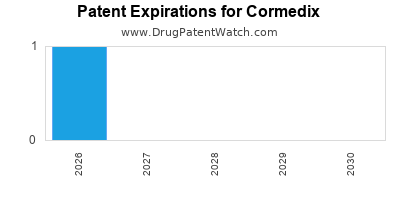
Last updated: July 29, 2025
Introduction
Cormedix is a biotechnology company specializing in innovative wound healing solutions and regenerative medicines. Established with ambitions to address unmet needs in tissue repair, Cormedix has carved a niche within the competitive landscape of regenerative medicine and advanced wound care. This analysis evaluates Cormedix’s market positioning, core strengths, competitive advantages, and strategic opportunities amidst a rapidly evolving pharmaceutical environment.
Market Overview
The global wound care market is projected to reach approximately $22 billion by 2028, driven by rising incidences of chronic wounds, diabetes-related complications, and an aging population [1]. The regenerative medicine segment, in particular, fosters significant innovation, with products that leverage bioengineered tissues and growth factors. Companies innovating in this space face intense competition from established players, including Johnson & Johnson, Smith & Nephew, and MiMedx, each vying for market share through product innovation and strategic partnerships.
Cormedix operates predominantly within this niche, offering advanced biomaterials and growth factor-based solutions that promote tissue regeneration. Its positioning hinges on targeted therapies that address complex wound scenarios unresponsive to conventional care.
Market Position and Competitive Standing
1. Niche Specialization and Innovative Pipeline
Cormedix's core strength lies in its focus on bioengineered solutions that facilitate tissue repair for complicated, non-healing wounds. Its pipeline includes proprietary biomaterials augmented with growth factors designed to accelerate healing, reduce scarring, and minimize infections.
The company's lead candidate, Dermalx, an advanced bioactive dressing, seeks to improve outcomes in diabetic foot ulcers and pressure ulcers—markets with significant unmet needs. These specialized products, aimed at hospital and specialized wound care centers, position Cormedix as a sought-after partner for targeted regenerative therapies.
2. Strategic Collaborations and Licensing
While still a smaller player, Cormedix has established strategic collaborations with academic institutions and biotech firms to accelerate product development. Licensing agreements focus on expanding the reach of its bioactive formulations, enabling faster commercialization and adoption.
These strategic ties build Cormedix’s credibility and extend its market penetration, especially in markets where regulatory clearance and clinical validation are critical.
3. Regulatory and Clinical Progress
Cormedix's products have garnered positive regulatory feedback, with several candidates progressing through clinical trials. Although not yet achieving full regulatory approval globally, early-phase trials demonstrate promising safety and efficacy profiles, bolstering its competitive stature.
The company's progress in gaining clearance from the U.S. Food and Drug Administration (FDA) and European Medicines Agency (EMA) signals maturation and validation of its technology platform.
Strengths and Competitive Advantages
1. Proprietary Technology Platform
Cormedix’s distinct bioengineering platform integrates growth factors with bioresorbable scaffolds, promoting rapid cell proliferation and tissue regeneration. This proprietary approach differentiates it from competitors relying solely on autografts or traditional dressings.
2. Focus on High-Barrier, Complex Wounds
Targeting high-acuity wounds such as diabetic foot ulcers provides Cormedix with a niche with significant treatment gaps. High medical need correlates with larger reimbursement potential and less pricing pressure, creating favorable market conditions.
3. Early Clinical Validation
Rigorous clinical studies validating efficacy and safety bolster confidence among clinicians and payers. These validations serve as critical differentiators in a competitive landscape where product differentiation hinges on clinical data.
4. Agility and Innovation
Compared to larger firms with bureaucratic inertia, Cormedix’s smaller size allows rapid iteration of products and quicker response to emerging clinical data and regulatory changes, fostering innovative solutions.
Challenges and Strategic Risks
1. Market Penetration and Commercial Scale
As a relatively small firm, Cormedix faces challenges scaling manufacturing, establishing widespread distribution channels, and gaining clinician adoption against entrenched players with extensive sales networks.
2. Regulatory and Reimbursement Barriers
Navigating complex regulatory pathways while demonstrating cost-effectiveness remains an obstacle, particularly in heterogeneous markets where reimbursement policies vary considerably.
3. Competitive Intensity
Competitors like Integra LifeSciences and Organogenesis have broad product portfolios and extensive global footprints, making market entry and expansion progressively difficult for smaller firms like Cormedix.
Strategic Insights and Recommendations
1. Focused Clinical Validation and Real-World Evidence
Intensify clinical trial efforts to generate robust, peer-reviewed data illustrating superior outcomes. Real-world evidence can strengthen payer negotiations and clinician confidence, facilitating reimbursement pathways.
2. Strategic Partnerships and Alliances
Forge collaborations with pharmaceutical giants or integrated healthcare providers to leverage manufacturing, distribution, and marketing capabilities. Partnering can accelerate market penetration and global reach.
3. Geographic Expansion
Prioritize regulatory approval and commercialization in high-growth markets such as China and India. Tailored strategies for these regions can capitalize on unaddressed clinical needs.
4. Product Pipeline Diversification
Invest in expanding the pipeline towards broader indications, including orthopedic and soft tissue repair, to diversify revenue streams and reduce dependence on a single niche.
5. Operational Scalability
Enhance manufacturing processes and quality systems to support increased demand and ensure compliance with international standards, enabling smoother entry into commercial markets.
Conclusion
Cormedix exemplifies a focused, innovative player within the regenerative wound care segment. Its proprietary bioengineered platforms, clinical advancements, and strategic collaborations underpin its growing market presence. Yet, overcoming barriers related to scale, regulatory complexity, and competition will determine its long-term trajectory.
The company’s strategic emphasis on clinical validation, partnership development, and pipeline expansion will be vital for advancing its market position and generating sustainable growth in the competitive pharmaceutical landscape.
Key Takeaways
- Cormedix’s niche specialization and proprietary technology position it uniquely within the advanced wound care market.
- Strategic collaborations and ongoing clinical validation bolster credibility and facilitate market entry.
- Addressing manufacturing scalability and reimbursement challenges is critical to expanding global footprint.
- Focused pipeline development into broader indications can diversify revenue and reduce market concentration risks.
- Partnerships and geographic expansion are pivotal strategies to accelerate growth amid competitive pressures.
FAQs
1. What differentiates Cormedix’s products from traditional wound care solutions?
Cormedix’s solutions leverage bioengineered scaffolds combined with growth factors, actively promoting tissue regeneration in complex wounds, unlike traditional dressings that primarily serve as passive barriers.
2. What are the primary markets for Cormedix’s products?
Key markets include treatment of diabetic foot ulcers, pressure ulcers, and surgical wounds within hospital settings, with potential expansion into orthopedic and soft tissue repair segments.
3. How does Cormedix’s clinical validation impact its market prospects?
Robust clinical data demonstrating safety and efficacy increases clinician adoption, influences reimbursement decisions, and attracts strategic partnerships, all vital for growth.
4. What are the main challenges for Cormedix in scaling its operations?
Scaling manufacturing, establishing distribution channels, navigating regulatory pathways, and competitive market entry pose significant challenges.
5. What strategic moves can enhance Cormedix’s competitive position?
Engaging in strategic partnerships, expanding clinical trials, entering new geographic regions, and diversifying product pipelines are key to strengthening its market presence.
Sources
[1] MarketsandMarkets. "Wound Care Market by Product, Application, End User – Global Forecast to 2028."