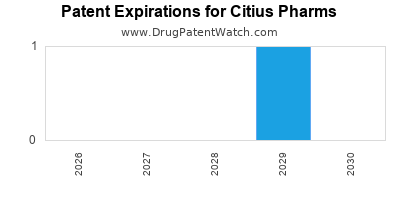
Last updated: July 30, 2025
Introduction
Citius Pharma stands amid an increasingly competitive biotechnology and pharmaceutical sector characterized by rapid innovation, regulatory challenges, and evolving market demands. This comprehensive analysis evaluates Citius Pharma's market positioning, core strengths, competitive differentiators, and strategic pathways for sustainable growth. As an emerging developer in specialized therapeutic segments, understanding its landscape offers valuable insights for investors, partners, and stakeholders aiming to navigate the complex pharmaceutical ecosystem efficiently.
Company Overview and Market Context
Founded with a focus on unmet medical needs, Citius Pharma specializes in developing and commercializing niche therapies, predominantly within infectious diseases, oncology, and ophthalmology. The company has gained recognition through its strategic acquisitions, proprietary drug pipelines, and collaborations with various biopharmaceutical entities. Amidst an environment of declining R&D productivity and intensified competition from both established pharma giants and nimble biotech startups, Citius's positioning hinges on its innovative assets and agile company structure.
The global pharmaceutical market is projected to reach USD 1.57 trillion by 2023, with specialty medicines constituting a significant growth segment driven by precision medicine and targeted therapies (source: IQVIA). Citius Pharma's focus on niche therapeutic areas aligns well with current trends emphasizing personalized treatment strategies and addressing specialized patient populations.
Market Position and Competitive Landscape
Core Market Segments
Citius is primarily engaged in:
- Infectious Diseases: Focusing on antibiotics and antifungal agents targeting resistant strains.
- Oncology: Developing therapies for specific cancer types, often with orphan drug potential.
- Ophthalmology: Exploring treatments for severe ocular conditions requiring specialized care.
The company's market positioning derives from its emphasis on high-margin, low-competition niches where regulatory hurdles and scientific complexity serve as barriers to entry for smaller competitors, positioning Citius as a potential leader in its targeted segments.
Competitive Environment
Citius operates within a landscape marked by intense competition from:
- Global pharmaceutical giants such as Johnson & Johnson, Pfizer, and Roche, which boast extensive R&D resources and broad portfolios.
- Specialized biotech firms that focus on breakthrough therapies, often employing cutting-edge technologies like gene editing and monoclonal antibodies.
- Generic and biosimilar manufacturers, which threaten to erode market share post-patent expiry.
In this context, Citius's agility, innovative pipeline, and strategic partnerships serve as its competitive assets to carve out and expand its market share.
Strengths of Citius Pharma
1. Proprietary and Targeted Portfolio
Citius boasts a portfolio of promising drug candidates, including late-stage clinical assets with clear unmet medical needs. Its focus on orphan indications allows faster regulatory approval pathways, such as the FDA's Orphan Drug designated programs, providing market exclusivity benefits.
2. Strategic Collaborations and Licensing Agreements
The company's strategic alliances enhance its R&D capacity and enable access to novel technologies and compounds. For instance, collaborations with academic institutions and licensing agreements with other biotech firms mitigate R&D risks and accelerate time-to-market.
3. Focused Market Niche Strategy
Operating within specialized segments minimizes direct competition and leverages higher pricing power and reimbursement advantages. Such differentiation is essential against larger, more diversified competitors.
4. Flexible R&D Approach
Citius employs an agile development model, allowing rapid decision-making and resource allocation. This flexibility ensures better adaptation to evolving scientific insights and regulatory requirements.
5. Investment in Manufacturing and Supply Chain
By establishing scalable manufacturing capabilities and forging supply contracts early, Citius aims to ensure reliability and ease of market entry upon approval, reducing time-to-revenue.
Strategic Insights and Opportunities
1. Capitalizing on Orphan Drug Designations
Maximizing regulatory incentives through orphan status can expedite approvals, secure market exclusivity, and attract investment. Citius should continue to seek such designations across its pipeline, especially in aggressive fields like infectious diseases resistant to existing therapies.
2. Expanding Collaborative Networks
Broader partnerships with larger pharma and biotech companies can provide essential funding, commercialization expertise, and access to international markets. Co-development opportunities can also mitigate R&D risks.
3. Focus on Regulatory and Market Access Strategy
Proactively engaging with regulatory bodies and payers allows Citius to shape and expedite approval pathways, optimize pricing strategies, and secure favorable reimbursement terms.
4. Diversification and Pipeline Expansion
Investing in adjacent therapeutic areas and complementing existing assets can reduce dependence on a limited pipeline, ensuring long-term sustainability against competitive and scientific uncertainties.
5. Embracing Technological Innovation
Leveraging advances in precision medicine, biologics, and digital health can enhance Citius's R&D efforts, improve clinical outcomes, and streamline patient management.
Challenges and Risks
While strategic opportunities abound, Citius faces notable challenges:
- Funding Constraints: As a mid-stage biotech, securing sufficient capital to sustain ongoing R&D without diluting shareholder value remains critical.
- Regulatory Uncertainty: Navigating complex approval pathways, especially for innovative therapies, can delay commercialization.
- Intense Competition: Larger firms with extensive resources might acquire or develop similar agents, risking pipeline obsolescence.
- Patent and Market Exclusivity Risks: Patent challenges and the expiration of exclusivity periods could commoditize products, lowering profitability.
Conclusion
Citius Pharma leverages focused niche strategies, proprietary assets, and agile development to establish a competitive foothold in specialized pharmaceutical markets. With targeted collaborations, regulatory optimization, and pipeline expansion, the company is positioned to capitalize on its core strengths and mitigate prevailing risks. Its continued success hinges on the effective execution of strategic initiatives, securing financing, and navigating an intricate regulatory landscape.
Key Takeaways
- Strategic Niche Focus: Citius’s specialization in orphan and targeted therapies positions it favorably within a high-growth segment of pharmaceuticals demanding less direct competition and offering higher margins.
- Pipeline and Collaboration Leverage: The company's proprietary assets and strategic alliances enhance its R&D efficiency and commercialization prospects.
- Regulatory and Market Incentives: Orphan drug designations and early engagement with regulators accelerate approval timelines and market entry.
- Growth Opportunities: Expanding collaborations, diversifying pipelines, and embracing technological innovations are key to scaling operations.
- Risks and Challenges: Funding sustainability, regulatory hurdles, competitive pressures, and patent challenges necessitate vigilant strategic planning.
FAQs
1. How does Citius Pharma differentiate itself from larger competitors?
Citius’s agility, focus on niche therapeutic areas, and strategic collaborations enable it to develop specialized treatments with less direct competition. Its emphasis on orphan drugs offers advantages like faster approvals and market exclusivity.
2. What are the main growth drivers for Citius Pharma?
Key drivers include advancing late-stage pipeline assets, securing orphan drug designations, forming strategic partnerships, and leveraging technological innovations in drug development.
3. What risks does Citius face in its market expansion?
Major risks include regulatory delays, funding constraints, competitive encroachment, patent disputes, and market acceptance challenges for new therapies.
4. How can Citius Pharma utilize regulatory incentives to its advantage?
By securing orphan drug and breakthrough therapy designations, Citius can benefit from expedited review processes, tax credits, market exclusivity, and enhanced visibility to investors.
5. What should investors monitor to assess Citius's future prospects?
Investors should track pipeline progress, regulatory milestones, strategic partnership developments, funding rounds, and market acceptance of its key products.
Sources:
[1] IQVIA Global Use of Medicine Report, 2022.
[2] U.S. Food and Drug Administration (FDA) database.
[3] Citius Pharma corporate disclosures and pipeline reports.