Last updated: February 19, 2026
Calliditas Therapeutics holds a niche market position focused on rare kidney diseases, primarily IgA Nephropathy (IgAN), with its lead product Tarpeyo (budesonide extended-release capsules). The company's strategy centers on leveraging its expertise in targeted drug delivery for autoimmune and inflammatory conditions.
What is Calliditas's Market Position and Product Focus?
Calliditas Therapeutics is a biopharmaceutical company concentrating on the development and commercialization of treatments for rare, unmet medical needs, particularly in nephrology. Its primary focus is IgA Nephropathy (IgAN), a chronic autoimmune kidney disease.
- Lead Product: Tarpeyo (budesonide extended-release capsules). Tarpeyo is an oral formulation of budesonide, a corticosteroid, designed for targeted delivery to the kidneys to reduce inflammation.
- Target Indication: Tarpeyo is approved in the United States for the treatment of primary IgA Nephropathy (IgAN) in adults at risk of disease progression. This means patients with persistent proteinuria greater than or equal to 0.7 g/day. In Europe, it is approved under the brand name Kinpeyro.
- Clinical Development Pipeline: Beyond IgAN, Calliditas is exploring budesonide's potential in other kidney diseases with inflammatory components. This includes preclinical and early-stage clinical investigation for conditions like Focal Segmental Glomerulosclerosis (FSGS).
How is Tarpeyo Differentiated in the IgAN Market?
Tarpeyo's differentiation stems from its novel formulation and targeted mechanism of action, aiming to address the underlying inflammation in IgAN while minimizing systemic corticosteroid side effects.
- Mechanism of Action: Budesonide acts locally on the inflamed tissue in the gut-associated lymphoid tissue (GALT) and kidneys. The extended-release formulation is designed to release budesonide in the ileum and colon, allowing for absorption and subsequent anti-inflammatory effects in the kidneys.
- Targeted Delivery: This targeted approach contrasts with traditional systemic corticosteroids, which carry a higher risk of widespread side effects impacting multiple organ systems. The goal is to concentrate the therapeutic effect where it is most needed, in the kidney.
- Clinical Trial Data: The efficacy and safety of Tarpeyo are supported by the NEFS study, a Phase 3 clinical trial. Key findings included statistically significant reductions in proteinuria and stabilization of kidney function (eGFR decline) in the treatment group compared to placebo. The study met its primary endpoint, demonstrating a reduction in proteinuria by a mean of 31% from baseline in the Tarpeyo arm versus a 6% reduction in the placebo arm at 12 months. The NEFROS study, a sub-study within the NEFS trial, provided additional data on kidney biopsy analysis, showing reductions in glomerular inflammation and mesangial hypercellularity.
- Regulatory Approvals: Tarpeyo received U.S. Food and Drug Administration (FDA) approval on December 20, 2021. European Medicines Agency (EMA) approval for Kinpeyro (budesonide delayed-release capsules) was granted on December 16, 2022.
What are Calliditas's Key Strengths?
Calliditas's strategic strengths lie in its focused therapeutic area, proprietary drug delivery technology, and a clear path for commercialization in a growing orphan disease market.
- Orphan Disease Focus: Specializing in rare kidney diseases allows Calliditas to concentrate R&D efforts and build deep expertise in a specific therapeutic area with significant unmet needs.
- Proprietary Drug Delivery Platform: The extended-release formulation of budesonide is a proprietary technology. This platform has the potential for application in other inflammatory conditions requiring localized drug delivery.
- First-Mover Advantage (in targeted therapy): While corticosteroids have been used off-label, Tarpeyo is one of the first FDA-approved targeted therapies for IgAN, providing a significant first-mover advantage in this specific indication.
- Established Commercial Infrastructure: With U.S. approval and subsequent launch of Tarpeyo, Calliditas has built a commercial team and established distribution channels necessary for market penetration.
- Strategic Partnerships: Collaboration with established pharmaceutical companies, such as its agreement with Stendhal Pharma for commercialization in China, can expand market reach and mitigate development risks.
What are the Primary Risks and Challenges?
Calliditas faces challenges common to biopharmaceutical companies operating in the rare disease space, including market access, competition, and the inherent risks of drug development.
- Market Access and Reimbursement: Securing favorable reimbursement from payers is critical for patient access to Tarpeyo. The cost of orphan drug therapies can be substantial, leading to scrutiny from insurers.
- Competition:
- Off-Label Therapies: Physicians may continue to use existing treatments off-label, such as conventional corticosteroids or immunosuppressants, which may limit initial adoption of Tarpeyo.
- Emerging Therapies: The IgAN landscape is evolving, with several other companies developing novel therapies. These include:
- Evrenzo (evodiamine): Developed by Travere Therapeutics, currently in Phase 3 trials.
- Atrasentan: Developed by Versanis Bio (formerly owned by DaVita), a selective endothelin A receptor antagonist, which has shown significant proteinuria reduction in trials.
- Narsoplimab: Developed by Omeros Corporation, a mannan-binding lectin-associated serine protease-2 (MASP-2) inhibitor, which has received accelerated approval for a related condition (THAU).
- Filgotinib: A JAK inhibitor explored by Gilead.
- These emerging therapies may offer different mechanisms of action or potentially improved efficacy or safety profiles.
- Physician Education and Prescriber Behavior: Educating nephrologists and gastroenterologists about IgAN as a treatable condition and the specific benefits and administration of Tarpeyo is essential for uptake. Shifting established treatment paradigms can be slow.
- Clinical Trial Expansion: Expanding Tarpeyo's use into other kidney diseases requires successful completion of further clinical trials, which carry inherent risks of failure or suboptimal results.
- Manufacturing and Supply Chain: Ensuring consistent, high-quality manufacturing and a robust supply chain for a global launch is a significant operational undertaking.
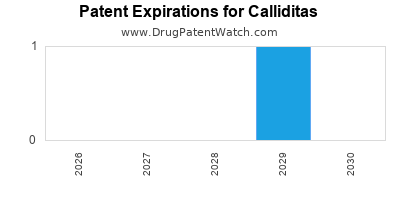
- Intellectual Property and Patent Expiry: While current patents protect Tarpeyo, future patent challenges or eventual expiry could lead to generic competition, impacting long-term revenue.
What are Calliditas's Strategic Options and Outlook?
Calliditas's strategic direction is likely to involve expanding Tarpeyo's indications, exploring its delivery platform, and potentially seeking strategic partnerships or acquisition.
- Indication Expansion:
- FSGS: Further development in Focal Segmental Glomerulosclerosis is a logical next step, leveraging the anti-inflammatory properties of budesonide. Success here would significantly broaden the market for the drug.
- Other Kidney Diseases: Exploration of other inflammatory kidney conditions with unmet needs remains a possibility.
- Geographic Expansion: Continued rollout of Tarpeyo/Kinpeyro in Europe and expansion into other ex-U.S. markets will be critical for revenue growth. This may involve partnerships for distribution and commercialization.
- Pipeline Development: Investment in the preclinical and early-stage pipeline for novel applications of its drug delivery technology could create future value.
- Strategic Partnerships/Acquisition: As a company with a marketed orphan drug, Calliditas could become an attractive acquisition target for larger pharmaceutical companies looking to expand their rare disease portfolios. Alternatively, strategic collaborations for co-development or co-commercialization of pipeline assets could be pursued.
- Data Generation: Continued generation of real-world evidence (RWE) and long-term follow-up data for Tarpeyo will be important for solidifying its market position and demonstrating value to payers and physicians.
The outlook for Calliditas is contingent on successful market penetration of Tarpeyo in IgAN, demonstrating clear clinical and economic value to payers, and the successful development of its pipeline. The competitive landscape for IgAN is intensifying, necessitating a strong commercial execution and continued innovation.
Key Takeaways
- Calliditas Therapeutics is focused on rare kidney diseases, with Tarpeyo (budesonide ER) as its lead product for IgA Nephropathy.
- Tarpeyo differentiates through targeted delivery of budesonide to reduce inflammation with potentially fewer systemic side effects than conventional corticosteroids.
- Key strengths include its orphan drug focus, proprietary delivery platform, and a first-mover advantage in targeted IgAN therapy.
- Major risks involve market access, reimbursement challenges, and competition from existing and emerging IgAN treatments.
- Strategic priorities include expanding Tarpeyo's indications (e.g., FSGS), international market rollout, and further pipeline development.
FAQs
-
What is the primary target patient population for Tarpeyo in the U.S.?
Tarpeyo is approved for adult patients in the U.S. with primary IgA Nephropathy (IgAN) who have persistent proteinuria greater than or equal to 0.7 g/day.
-
What are the main competitors to Tarpeyo in the IgA Nephropathy market?
Competition includes off-label use of existing treatments and emerging therapies such as atrasentan (Versanis Bio), Evrenzo (Travere Therapeutics), and Narsoplimab (Omeros Corporation).
-
Beyond IgA Nephropathy, what other indications is Calliditas exploring for its budesonide technology?
Calliditas is investigating budesonide's potential in other kidney diseases with inflammatory components, including Focal Segmental Glomerulosclerosis (FSGS).
-
What is the projected timeline for European market penetration of Kinpeyro (budesonide)?
European Medicines Agency (EMA) approval for Kinpeyro was granted on December 16, 2022. Commercial launch activities and market penetration efforts are ongoing in European countries.
-
What are the primary challenges Calliditas faces in commercializing Tarpeyo?
Commercialization challenges include securing favorable market access and reimbursement from payers, educating physicians on the benefits of targeted therapy, and overcoming competition from established and developing treatments.
Citations
[1] Calliditas Therapeutics AB. (n.d.). Tarpeyo™. Retrieved from https://www.calliditas.com/en/pipeline/tarpeyo
[2] U.S. Food and Drug Administration. (2021, December 20). FDA approves Tarpeyo (budesonide extended-release capsules) as the first treatment to significantly reduce proteinuria in IgA Nephropathy. [Press Release]. Retrieved from https://www.fda.gov/drugs/news-events-human-drugs/fda-approves-tarpeyobudesonide-extended-release-capsules-first-treatment-significantly-reduce-proteinuria-iga
[3] European Medicines Agency. (2022, December 16). Kinpeyro. Retrieved from https://www.ema.europa.eu/en/medicines/human/EPAR/kinpeyro
[4] C. H. (2022, October 11). Calliditas Therapeutics Announces Updated Data from the Phase 3 NEFS Study of Tarpeyo (budesonide extended-release capsules) in IgA Nephropathy. [Press Release]. Retrieved from https://www.globenewswire.com/news-release/2022/10/11/2531728/0/en/Calliditas-Therapeutics-Announces-Updated-Data-from-the-Phase-3-NEFS-Study-of-Tarpeyo-budesonide-extended-release-capsules-in-IgA-Nephropathy.html
[5] Travere Therapeutics. (n.d.). Travere Therapeutics Pipeline. Retrieved from https://www.travere.com/pipeline/
[6] Versanis Bio. (n.d.). Atrasentan. Retrieved from https://www.versanisbio.com/pipeline/atrasentan/
[7] Omeros Corporation. (n.d.). Omeros Corporation Pipeline Update. Retrieved from https://www.omeros.com/pipeline/