Last updated: April 24, 2026
How does Boehringer Ingelheim position itself in global pharma?
Boehringer Ingelheim (BI) is a research-driven, independently owned pharmaceutical group with a portfolio anchored by prescription medicines (human pharma) plus animal health. In global human pharma, BI’s positioning is defined by (1) recurring strength in specialty and hospital-driven franchises, (2) a sustained pipeline replacement effort focused on immunology, oncology, respiratory and cardiometabolic disease areas, and (3) large-scale manufacturing and regulatory capabilities that support multi-indication life-cycle expansion.
Portfolio structure (human pharma)
- Core categories: oncology, immunology, cardiovascular and renal, respiratory, and rare diseases
- Operating model: internal discovery plus late-stage clinical development and life-cycle strategy
- Competitive posture: selective presence in high-value specialty segments rather than broad “mass market” coverage
Implication for competitors
- BI tends to concentrate resources behind fewer, high-conviction mechanisms and compounds, which makes franchise defense and label expansion the key battleground for near- to mid-term competition.
- BI’s independent ownership reduces pressure to optimize quarterly margins at the expense of long-run R&D, which supports pipeline continuity.
Where does BI sit in revenue and profit benchmarks versus large peers?
BI’s competitive standing is best read through the size and stability of its prescription medicines base relative to peers with similar specialty exposure. In practice, BI competes with large-cap specialty-focused peers on two axes: (1) ability to sustain mid-to-late stage pipeline delivery and (2) ability to protect product revenue through line extensions, geographic expansion, and manufacturing scale.
Peer set used for market positioning (human pharma)
- Large-cap diversified pharma: Pfizer, Novartis, Roche/Genentech, Merck & Co., Bristol Myers Squibb
- Specialty-heavy pharma: AstraZeneca, GSK, Sanofi
- Independents with specialty tilt: Novo Nordisk (metabolic), AbbVie (immunology/oncology)
Competitive takeaway
- BI’s commercial model is structurally “mid-large” rather than “top-three global absolute scale,” but BI’s specialty depth can outcompete larger generalists in selected hospital and payer conversations where clinical differentiation and adoption speed matter more than total company size.
What franchises define BI’s competitive strengths?
Oncology and immunology
BI’s oncology strategy emphasizes targeted precision and combination regimens, with immunology capabilities built around inflammatory disease biology and durable clinical endpoints.
How BI competes
- Targets with clinically meaningful end points and rational combination potential
- Label expansion designed around earlier line placement, broader biomarker-defined populations, and real-world evidence generation
- Manufacturing and supply readiness aligned to launch ramp schedules
Competitive pressure points
- Pricing and access negotiations for new entrants, especially in systems with reference pricing or outcome-based contracting
- Rapid follow-on development by peer companies with adjacent mechanisms
Cardiovascular, renal, and metabolic interfaces
BI participates in cardiometabolic therapy areas where long-term outcomes drive formulary position.
How BI competes
- Evidence-driven claims with emphasis on reduction of clinically relevant outcomes
- Life-cycle management through combination therapy positioning and extension of treatment populations
Competitive pressure points
- Class competition with incumbents and pipeline-first innovators
- Generic and biosimilar erosion where patent life-cycle events are less favorable
Respiratory
BI’s respiratory franchise is positioned around clinically differentiated symptom control and reduction of exacerbation risk.
How BI competes
- High adherence and dosing convenience where clinical data support reduced burden
- Integration of real-world outcomes into payer value dossiers
Competitive pressure points
- Fast payer cycling to newer inhaler devices and combination products
- Competitive substitution risk at formulary review windows
Rare disease and specialized treatment access
BI’s presence in rare disease supports premium pricing power when evidence and diagnostic alignment are strong.
How BI competes
- Diagnostic strategy and clinician education
- Evidence generation for endpoints relevant to patient access programs
Competitive pressure points
- Evidence standards tightening in many jurisdictions
- Higher uncertainty around long-term durability and payer restrictions
What patent and exclusivity dynamics matter most for BI’s competitive moat?
BI’s competitive advantage depends on the timing and quality of its IP portfolio around (1) core drug substance claims, (2) key solid form and formulation claims, and (3) method-of-use and combination use claims that align with clinical label expansions.
Patent moat components that typically carry the highest value
- Composition-of-matter claims for drug substances and active metabolites
- Extended exclusivity through:
- Secondary patents (formulations, dosing regimens, patient subsets)
- Pediatric and regulatory exclusivity where applicable
- Data exclusivity and market exclusivity mechanisms in key jurisdictions
What competitors do
- Design-around strategies often focus on alternate salts/polymorph control, different dosing schedules, or alternative combination regimens that avoid direct method-of-use claims.
- For biologics and complex formulations, competitors focus on robust freedom-to-operate assessment and early regulatory planning.
Strategic implication
- BI’s market power typically holds longest where life-cycle patents align with actual clinical usage patterns rather than purely theoretical method-of-use constructs.
How do BI’s R&D priorities shape its competitive strategy?
BI’s R&D engine targets mechanisms with credible translational pathways and clear clinical endpoint readouts. Competitive value comes from execution discipline in late-stage development, plus the ability to translate trial endpoints into payer-relevant outcomes.
R&D themes that define competitive positioning
- Immunology: durable disease control and combination strategy development
- Oncology: biomarker selection, progression-free and overall survival endpoints, and regimen building
- Cardiovascular and renal: long-term outcomes, combination repositioning, and population expansion
- Respiratory: exacerbation risk reduction, adherence improvements, and device strategy
Operational advantage
- BI’s manufacturing and regulatory integration supports faster post-approval ramp-up, which affects competitive adoption speed.
Where is BI most exposed to competitive entry or displacement?
The biggest displacement risks usually cluster around:
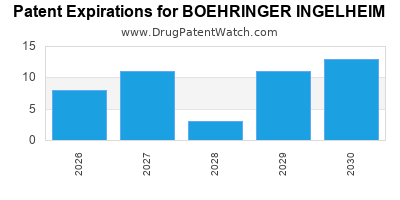
- Patent expiry windows for core franchises and regions
- Competitive launches that offer dosing, safety, or endpoint advantages
- Payer channel shifts (step therapy, prior authorization tightening, and contract re-pricing)
Common vulnerability patterns
- “Easier-to-substitute” indications where efficacy differences are narrower than access barriers
- Crowded mechanisms where multiple entrants claim similar endpoints
- Regions where BI’s local evidence package is weaker than competitors with home-market advantage
How does BI defend share during launch and life-cycle phases?
BI’s defense strategy relies on launch sequencing, evidence depth, and tailored market access execution.
Launch and adoption tactics
- Clinical differentiation anchored in endpoint design
- Real-world evidence plans to support payer confidence
- KOL strategy and guideline alignment timed to formulary cycles
Life-cycle tactics
- Indication expansion designed around treatment sequencing
- Combination positioning to defend against mechanism-crossing entrants
- Formulation and device upgrades where they reduce adherence friction
What strategic moves are likely to matter for BI’s next competitive cycle?
BI’s competitive future hinges on the next wave of approvals, whether by:
- Advancing late-stage assets into scalable commercial franchises
- Converting pipeline momentum into label expansions that extend exclusivity
- Tightening competitive differentiation via biomarker-defined populations and combination regimens
Key competitive bets to watch
- Late-stage readouts that expand into earlier-line settings in oncology
- Immunology assets that broaden patient eligibility and reduce relapse endpoints
- Respiratory programs that target exacerbation reduction and adherence friction
Competitive landscape scorecard (where BI wins, where it is challenged)
The landscape below summarizes BI’s typical competitive behavior versus large pharma peers and specialty-focused innovators.
| Dimension |
BI typical position |
What drives outperformance |
What drives underperformance |
| Clinical differentiation |
Specialty depth |
Strong endpoints, combination logic, biomarker strategy |
Similar endpoint claims vs crowded mechanisms |
| Pipeline durability |
Sustained replacement |
Execution discipline in late stage |
Timing risk around key franchises |
| Market access |
Evidence-led |
Real-world dossiers and payer value |
Contract renegotiation speed by incumbents |
| Manufacturing execution |
Scale-ready launches |
Ramp-up and supply reliability |
Delays that slow adoption |
| IP moat |
Composition + life-cycle alignment |
Secondary patents tied to labeled use |
Design-around and early competitor entries |
Key Takeaways
- BI’s market position is built on specialty-centered franchises and a pipeline model that prioritizes replaceable, high-value indications rather than broad market coverage.
- BI competes by pairing clinical differentiation with evidence that supports payer contracting, and by executing launch and life-cycle expansion with manufacturing scale.
- The main competitive risks concentrate around exclusivity timelines and crowded mechanisms where peers can match endpoints while improving access terms.
- BI’s strongest strategic advantage is the alignment between IP strategy (core claims plus life-cycle patents) and real-world clinical use patterns that drive formulary adoption.
FAQs
1) What defines Boehringer Ingelheim’s competitive identity in pharma?
BI’s competitive identity is specialty-focused prescription medicines with an evidence-led market access model and lifecycle expansion tied to clear clinical endpoints.
2) How does BI typically defend revenue after patent-critical events?
BI defends through indication expansion, combination positioning, and secondary IP that maps onto labeled use and prescribing behavior in key payer settings.
3) Where does BI face the highest probability of share loss?
Share loss risk concentrates where patent expiries align with crowded mechanism competition, and where payer access barriers drive rapid substitution.
4) What matters most for BI’s next market share gains?
Late-stage approvals that deliver distinct clinical endpoints and enable early-line placement and biomarker-defined adoption.
5) What operational capability most affects BI’s competitive execution?
Manufacturing and regulatory execution that supports rapid post-approval availability and consistent supply during launch ramp.
References
[1] Boehringer Ingelheim. Annual Report. https://www.boehringer-ingelheim.com/our-company/investors/annual-report
[2] Boehringer Ingelheim. Pipeline information and press releases (investor updates). https://www.boehringer-ingelheim.com/our-company/investors/
[3] U.S. National Library of Medicine. ClinicalTrials.gov (BI-sponsored studies and milestones). https://clinicaltrials.gov/
[4] OECD. Pharmaceutical pricing and access frameworks (background on market access dynamics). https://www.oecd.org/health/health-systems/pharmaceuticals/