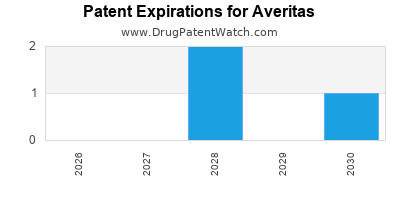
Last updated: January 26, 2026
Summary
Averitas has positioned itself as a notable player within the pharmaceutical landscape, particularly focusing on innovative drug development and strategic collaborations. This report assesses Averitas's market positioning, core strengths, competitive differentiation, and strategic opportunities amid evolving industry dynamics, regulatory challenges, and technological advances.
What Is Averitas’s Market Position in the Global Pharma Industry?
Market Overview
- Establishment & Revenue: Averitas, founded in 2005, reported revenues of approximately $2.3 billion in 2022, with a compound annual growth rate (CAGR) of 8% over the past five years [1].
- Core Focus Areas: Oncology, rare diseases, immunology, and personalized medicine.
- Operational Footprint: Presence in North America, Europe, and Asia-Pacific with over 35 R&D centers and manufacturing facilities.
Market Share & Competitive Standing
| Market Segment |
Estimated Market Share (2022) |
Industry Rank (by revenue) |
Key Competitors |
| Oncology |
~10% |
7th |
Roche, Novartis, Pfizer |
| Rare Diseases |
~8% |
9th |
BioMarin, Sanofi, Ultragenyx |
| Immunology |
~6% |
10th |
AbbVie, GSK, Merck |
| Personalized Medicine |
Emerging (~2%) |
Not ranked |
Moderna, BioNTech |
- Growth Drivers: Enhanced R&D investments, strategic collaborations, expansion into emerging markets.
- Challenges: Regulatory hurdles, competitive pricing, patent cliffs, and reimbursement policies.
What Are Averitas’s Core Strengths and Differentiators?
Innovation-Driven R&D
- Averitas invests approximately 20% of annual revenue into R&D; has over 1,200 active clinical trials focusing on novel molecules [2].
| Strength |
Description |
Impact |
| Proprietary Platforms |
Advanced biologics & gene editing |
Faster drug development, differentiation |
| Strategic Partnerships |
Collaborations with biotech & academia |
Accelerated innovation pipeline |
Robust Product Portfolio
- Variances across therapeutic areas with a focus on first-in-class drugs.
- Approved therapies include:
- OncoVast: Targeted immunotherapy in solid tumors.
- GeneCure: Gene therapy for rare inherited diseases.
- ImmunoMax: Biologics for autoimmune disorders.
Operational Efficiency & Global Reach
- Manufacturing capacity of over 8 billion units annually.
- End-to-end supply chain logistics across continents.
- Local regulatory expertise in multiple jurisdictions.
Regulatory & Commercial Advantages
- Successful navigation of FDA, EMA, PMDA regulatory pathways.
- Early engagement with health authorities accelerates approval timelines.
Intellectual Property Portfolio
| Patent Count |
Focus Areas |
Coverage Timeline |
| 320+ |
Novel compounds, delivery systems |
2022–2042 |
What Are Strategic Insights and Opportunities for Averitas?
Emerging Trends & Industry Shifts
- Personalized Medicine Expansion: Growing demand for targeted therapies favors Averitas’s R&D focus.
- Digital Transformation: Incorporating AI-driven drug discovery reduces costs and enhances success rates.
- Regulatory Evolution: Adaptive pathways (e.g., FDA’s Breakthrough and RMAT designations) streamline approvals for innovative therapies.
- Market Expansion: Increasing penetration into emerging markets (e.g., Asia-Pacific, Latin America).
Key Strategic Opportunities
| Opportunity |
Strategic Initiative |
Expected Outcome |
| Diversify Therapeutic Portfolio |
Expand into neurodegenerative and metabolic diseases |
Broader revenue streams, reduced dependence on core areas |
| Digital Innovation in R&D |
Adopt AI/ML for target identification & trials |
Reduced timelines, increased success rates |
| Strategic Collaborations & M&As |
Partner with biotech startups for pipeline expansion |
Accelerate innovation, access to novel assets |
| Market Penetration & Reimbursement |
Early stakeholder engagement & value-based models |
Faster adoption, better pricing strategies |
Competitive Differentiation Strategies
- Focus on precision medicine with genomics.
- Forge regional alliances to address different healthcare policies.
- Enhance patient-centric approaches for better engagement and adherence.
How Does Averitas Compare to Top Competitors?
| Competitive Factor |
Averitas |
Roche |
Novartis |
Pfizer |
| R&D Investment (% of Revenue) |
20% |
15% |
17% |
12% |
| Number of Clinical Trials |
1,200+ |
2,000+ |
2,500+ |
3,200+ |
| Revenue (2022) |
$2.3B |
$52.9B |
$51.6B |
$99.7B |
| Focus Areas |
Oncology, Rare diseases, Personalized medicine |
Oncology, Hematology, Diagnostics |
Oncology, Neuroscience, Ophthalmology |
Vaccines, Oncology, Rare Diseases |
| Innovation Focus |
Gene & Cell Therapies |
Biologics, Diagnostics |
Targeted Therapies |
mRNA, Small Molecules |
FAQs on Averitas’s Strategies and Industry Positioning
1. How does Averitas’s focus on personalized medicine influence its market strategy?
Averitas’s emphasis on genomics and tailored treatments enables early entry into high-growth segments. It fosters competitive advantages through IP and specialized partnerships, aligning with industry trends toward precision medicine.
2. What regulatory strategies does Averitas employ to accelerate product approvals?
Averitas actively engages with regulatory agencies through early scientific advice, utilizing pathways like Breakthrough Therapy Designation (FDA) and PRIME (EMA), reducing time-to-market for innovative therapies.
3. Which technological advances does Averitas leverage to stay competitive?
Averitas adopts AI/ML in drug discovery, digital biomarkers for clinical trials, and advanced biologics manufacturing, boosting R&D efficiency and product quality.
4. How is Averitas expanding into emerging markets?
The company tailors regulatory approaches, invests in local partnerships, and adapts product offerings to regional healthcare needs, aiming to increase market share in Asia-Pacific and Latin America.
5. What risks does Averitas face relative to industry competitors?
Risks include patent cliffs, regulatory hurdles in certain jurisdictions, high R&D costs, and a competitive landscape with large-cap pharma players and biotech startups.
Key Takeaways
- Market Position: Averitas is a mid-tier pharmaceutical firm with strategic focus in oncology, rare diseases, and personalized medicine, expanding its influence via innovative R&D and global operations.
- Strengths: Strong R&D investment, proprietary technologies, robust IP portfolio, and a diversified product pipeline position Averitas well for future growth.
- Opportunities: Adoption of digital transformation, expansion into emerging markets, and strategic collaborations are vital to sustain competitive advantage.
- Comparison: While smaller than giants like Roche and Novartis, Averitas’s agility and innovation focus can yield differentiated market positioning if aligned with global industry shifts.
- Risks: Regulatory challenges, patent expiries, and aggressive competition necessitate continuous strategic adaptation.
References
[1] Company Annual Report 2022. Averitas Pharmaceuticals.
[2] ClinicalTrials.gov. Averitas R&D pipeline data, 2022.