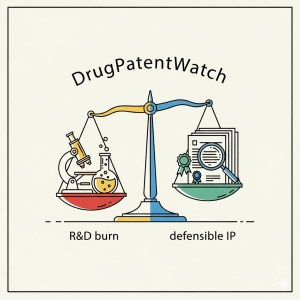
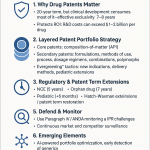
The biopharmaceutical and life sciences sectors face a central, defining strategic tension: the optimal allocation of capital between high-intensity Research & Development (R&D) and the strategic defense of Intellectual Property (IP). For executives and institutional investors, this is not merely a budgetary constraint but a fundamental pain point that determines a company’s long-term trajectory and value. A traditional, linear approach to this challenge—where R&D is conducted and IP is secured as a legal afterthought—is proving to be a value-eroding exercise. This report, based on an analysis of financial data, legal case studies, and evolving industry trends, concludes that a new strategic playbook is required for success. Future-ready organizations will be those that move beyond simply outspending competitors and instead adopt a multi-disciplinary, long-term vision. This new framework integrates IP strategy into the R&D process from its inception, leverages advanced analytics to proactively mitigate risk, and cultivates a culture of continuous learning to inform future capital decisions.
Section 1: The Biopharma Paradox: Deconstructing the R&D-IP Capital Pain Point
The Staggering Cost and Risk of R&D
The biopharmaceutical industry operates within a uniquely high-stakes financial environment, characterized by astronomical costs, protracted timelines, and a near-binary outcome for each investment. The sheer financial gauntlet of drug development is well-documented. A study by the Tufts Center for the Study of Drug Development (CSDD) estimated that the average cost to develop and secure marketing approval for a new prescription medicine is $2,558 million.1 This figure is comprised of two primary components: approximately $1,395 million in average out-of-pocket costs and an additional $1,163 million in “time costs,” which represents the expected returns that investors forego during the drug’s often decade-long development cycle.1 More recent data from a 2024 Deloitte report for the top 20 global pharmaceutical companies places this figure at an even higher $2.23 billion per asset, an increase from $2.12 billion in 2023.2 These numbers underscore the immense financial pressure that defines the industry’s landscape.
This financial burden is compounded by a punishingly high attrition rate. The “valley of death” is not a metaphor but a statistical reality: over 90% of drugs fail during development.4 The sunk costs associated with these failures are staggering; a single failed Phase III trial, for example, is estimated to cost between $200 million and $500 million.4 Consequently, the immense profits generated by a single successful drug must not only cover its own development costs but also the cumulative financial burden of numerous preceding failures.6 This creates an inherent financial pressure that must be meticulously factored into any strategic valuation model.4
The Cost and Strategic Imperative of IP Protection
While R&D fuels innovation, it is intellectual property protection that safeguards the fruits of that labor.7 A successful R&D program without a robust IP strategy is a financially destructive endeavor. The investment in IP is not an optional legal expense; it is the foundational pillar that ensures a return on the multi-billion-dollar R&D investment.7
Securing and defending a patent for a complex pharmaceutical or biotech invention is a multi-stage, multi-jurisdictional financial commitment. A single US utility patent, from application to issuance, can cost $30,000 or more, with highly complex pharmaceutical or biotech patents ranging from $20,000 to $50,000 or more due to extensive research and regulatory considerations.9 This initial investment is further accompanied by significant, recurring maintenance fees required to keep the patent in force throughout its term.9 The strategic imperative of a strong IP portfolio extends beyond mere legal protection; it is a critical prerequisite for attracting venture capital and other forms of investment.8 Investors conduct thorough IP due diligence to assess a company’s competitive positioning and its ability to establish long-term revenue streams.8 Without a defensible IP strategy, a company can face significant “freedom-to-operate” issues, costly legal disputes, or an inability to attract the later-stage funding required for product development and commercialization.8
The core dilemma is a strategic and temporal misalignment. The R&D process and the patent clock operate on concurrent but conflicting timelines. While a patent typically lasts for 20 years from the date of filing, the prolonged R&D and regulatory approval process, which can last 10 to 15 years, significantly erodes the period of market exclusivity.4 This means that every day, every dollar, and every year spent in the R&D marathon is a day lost from the valuable window in which to commercially monetize the innovation before the patent expires.13 Therefore, the most acute pain point is not simply the cash burn itself, but the race against an unforgiving clock—the need to fund a multi-year, multi-billion-dollar pipeline that, even upon success, has a limited and finite period to recoup its immense investment.
Table 1: The Cost of a New Drug: A Historical Comparison
Source
Year
Out-of-Pocket Costs
Capitalized Costs
Total Estimated Cost per Approved Drug
Tufts CSDD 1
2003
$403 million (in 2000 dollars)
$401 million (in 2000 dollars)
$802 million (in 2000 dollars)
Tufts CSDD 1
2014
$1,395 million (in 2013 dollars)
$1,163 million (in 2013 dollars)
$2,558 million (in 2013 dollars)
Deloitte 2
2023
N/A
N/A
$2.12 billion
Deloitte 2
2024
N/A
N/A
$2.23 billion
Table 2: Estimated Costs of Biopharma Patenting in the United States
Category of Expense
Estimated Cost (in USD)
Description
Highly Complex Patent Filing
$20,000 – $50,000+
Includes extensive research, drafting, and legal fees for a highly complex pharmaceutical or biotech invention.9
Provisional Application
$300 14
An inexpensive, initial filing that establishes a priority date.
Non-Provisional Patent Filing
$8,000 – $15,000+
The main application, including legal fees, for a non-provisional patent.9
USPTO Filing Fees (Small Entity)
~$800
Official fees paid to the U.S. Patent and Trademark Office.9
Response to Office Action
$1,000 – $5,000+ per round
Legal fees for responding to a USPTO rejection or request for clarification.9
Recurring fees to keep a granted patent in force for a small entity.9
Section 2: The Evolving Landscape of Innovation and ROI
The Sunset of the Blockbuster Era
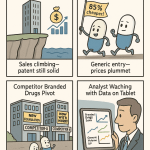
For decades, the pharmaceutical industry’s economic engine was fueled by the “blockbuster” drug model—a strategy of developing a single, high-volume drug for a widespread condition and securing an ironclad patent to drive multi-billion-dollar revenues.15 However, this playbook is now fundamentally broken. The traditional $1 billion annual sales benchmark, which once defined this era, has been devalued by market inflation and soaring development costs, meaning that achieving this status today offers a much lower return on the immense R&D investment.15 The most significant threat to this model is the “patent cliff”—a sudden and catastrophic decline in revenue that occurs when a blockbuster drug loses its exclusivity.15 The revenue from a drug can plummet by 80-90% within the first year of generic or biosimilar entry.15 The expiration of patents for drugs like Eliquis and Plavix serves as a stark reminder of this existential threat, highlighting that the decline of the blockbuster era is a structural, not a temporary, shift.15
A New Paradigm: Niche and Precision Medicine
In response to the challenges of the old model, the industry is pivoting toward specialized and precision medicine. This strategic shift moves away from high-volume, mass-market drugs toward high-value, niche therapies.15 This new frontier is being driven by technological advances, including multi-omics and artificial intelligence (AI), which allow companies to focus on smaller patient populations with specific, unmet medical needs.15 Complex therapeutic areas like oncology, for instance, are increasingly becoming a focus of R&D investment.17
The financial dynamics of this transition are complex. Recent successes in the GLP-1 drug class for diabetes and obesity have created a temporary and deceptive upward trend in the industry’s average R&D return on investment.2 However, this is an anomaly. A closer look reveals that when these high-performing assets are excluded from the analysis, the average return on investment for the top 20 global pharmaceutical companies drops significantly, from 5.9% to 3.8% in 2024, revealing a much less positive underlying picture of R&D productivity.3 This structural shift away from the “winner-take-all” blockbuster model fundamentally alters the capital allocation challenge. Companies can no longer rely on a single, massive hit to fund the next generation of R&D. The new imperative is to build a diversified and resilient portfolio of niche assets, with each investment carefully managed for its individual ROI profile.4 This transforms the primary capital pain point from finding the next blockbuster to strategically managing a collection of smaller, more certain revenue streams to ensure the long-term viability of the enterprise.
Section 3: Strategic Levers for Optimizing the Balance
Capital Allocation as a C-Suite Imperative
In the modern biopharma landscape, capital allocation is not a tactical budgeting exercise for the finance department; it is a core strategic discipline and the clearest articulation of a company’s priorities and risk tolerance.19 Treating capital allocation as a CEO-level responsibility ensures that decisions reflect a long-term strategic vision, rather than being driven by short-term cost pressures or legacy biases.19 Companies that make indiscriminate cuts to R&D or scientific affairs to hit short-term margin targets risk crippling their innovation engine and forfeiting future market competitiveness.19
Despite the high stakes, a significant gap exists in corporate governance. Only 8% of companies apply a formal “post-mortem” discipline to their major capital decisions, such as acquisitions or program shutdowns.20 This lack of a structured review process prevents organizations from learning what went right or wrong and incorporating those lessons into future decisions, which can perpetuate cognitive biases and inertia.19 Companies must adopt a culture of retrospective learning to strengthen future decisions and reduce strategic missteps.
The Proactive Power of Intelligence
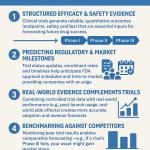
The most effective way to address the capital allocation pain point is not through financial restraint alone, but by proactively de-risking the R&D pipeline from the very beginning. In this new framework, IP and competitive intelligence are no longer reactive legal functions but predictive, strategic tools.13 Patent data, in particular, can serve as a “window into future market developments”.21 By leveraging advanced analytics and AI, companies can continuously monitor competitor patent filings, identify “white spaces” in the patent landscape, and align their R&D efforts with emerging technological trends.7
This strategic integration offers a substantial return on investment. The use of AI-driven patent intelligence can help forecast competitor milestones, predict litigation and regulatory risks, and strategically identify low-competition innovation pathways.13 This allows drug makers to move beyond deterministic project plans and build dynamic, probabilistic timelines, with the ultimate goal of compressing the lengthy development cycle.13 The promise is significant, with projections suggesting the potential to reduce R&D costs by up to 40-50% and cut drug discovery timelines by as much as 50%.13 This demonstrates that the investment in a robust IP and competitive intelligence framework is an investment in reducing the R&D burn rate itself, making it a critical lever for managing overall portfolio risk.
Beyond Patents: The Value of Trade Secrets and Data
In cutting-edge areas of innovation, such as mRNA and CRISPR technologies, the traditional patent paradigm may be insufficient to fully protect a company’s intellectual assets.23 The complex and multi-layered patent landscapes in these fields necessitate a multi-layered IP strategy that extends beyond patents. This is generating new opportunities to obtain and license valuable patents while simultaneously boosting the importance of trade secrets and treating data as a “precious form of intangible asset”.23 The case of Pfizer’s lawsuit against two former executives illustrates this business risk perfectly.24 The complaint alleges that the ex-executives stole documents containing trade secrets about a GLP-1 drug program, which provided them with an “unlawful head start” that saved their new startups “significant money and years of development time”.24 This case serves as a stark reminder that IP risk extends far beyond patent disputes and that a comprehensive IP strategy must encompass a multi-layered shield of protection for all intangible assets.
Section 4: The Biopharma Battlefield: Case Studies in Strategy and Consequence
The Humira Patent Thicket: A Masterclass in Lifecycle Management
AbbVie’s strategy for Humira stands as a definitive case study in how a company can leverage a robust IP strategy to maximize return on investment. This approach, known as “evergreening,” involved filing an astonishing 247 patent applications on Humira in the United States, with nearly 90% of them filed after the drug was first approved and on the market.25 This deliberate creation of a “patent thicket” effectively extended the drug’s market exclusivity for up to 39 years 26, thereby delaying biosimilar competition in the U.S. by several years compared to other international markets.25 The result of this strategy was a drug that has generated over $100 billion in sales for the company since its launch in 2002.25
However, this strategic masterclass comes with a significant paradox. The practice is highly controversial, with supporters arguing that it incentivizes continuous innovation and product improvements.27 Critics, on the other hand, contend that it stifles competition, elevates drug prices, and lacks significant therapeutic advantages over the original compound.27 The Humira case demonstrates that the most profitable IP strategy from a business perspective is not always the most ethically or societally beneficial, forcing companies to weigh the financial benefits against significant reputational and regulatory risks.
The Amgen and Enbrel Paradox
The strategic decisions made by Amgen regarding its drug Enbrel serve as a crucial counterpoint to the Humira case. A study analyzing Amgen’s pricing behavior for the drug revealed a striking finding: 100% of the drug’s revenue growth over a decade, which totaled more than $21 billion, came from consistent price increases rather than an increase in sales volume.29 The study then performed a counterfactual analysis to determine if these profits translated into increased R&D spending to develop innovative new medicines, as the industry often argues is the purpose of high drug prices.29 The analysis concluded that the loss of this revenue would have resulted in an estimated $3.8 billion less in R&D spending, which translates to nearly “one less drug developed”.29 This case directly challenges the core industry argument by demonstrating that profit growth driven by price hikes on older, branded, monopoly drugs may not necessarily lead to the development of innovative new medicines.29
Table 3: The Humira and Enbrel Case Studies: A Strategic and Financial Summary
Drug (Company)
Primary Revenue Protection Strategy
Financial Outcome
Societal/Strategic Consequence
Humira (AbbVie) 25
Creation of a “patent thicket” to extend market exclusivity and delay generic entry.
Generated over $100 billion in sales. Maintained market dominance.
Critics argue the strategy stifled competition, led to higher drug prices, and lacked significant therapeutic advancements.27
Enbrel (Amgen) 29
Consistent and significant price increases over a decade.
Generated over $21 billion in revenue growth, with 100% of the growth from price hikes.
A study found that the profits from price increases did not translate into a commensurate increase in R&D spending, undermining the industry’s innovation argument.29
The Perils of IP Litigation
The case studies of IP strategy and capital allocation are not confined to a company’s internal decisions; they often play out in the courts. These legal battles highlight a critical reality: simply holding a patent is not enough; a company must be prepared to defend it vigorously, and a failure to do so can destroy value.31 For instance, the case of Salts Healthcare, which failed in its infringement claim due to “insufficient evidence,” demonstrates that a patent is only as strong as a company’s ability to enforce it with robust legal and evidentiary support.31 Similarly, the legal battles of
Amgen v. Sanofi and 10x Genomics underscore the complexities of navigating rapidly advancing scientific fields and the critical need for companies to conduct regular patent searches and freedom-to-operate analyses to mitigate infringement risks.31
Beyond patent disputes, the business risk of intellectual property theft is also a major concern. The Pfizer trade secret case against its former executives serves as a cautionary tale.24 The lawsuit alleges that the theft of documents related to a developing GLP-1 drug program provided the ex-executives with an “unlawful head start” and saved them “significant money and years of development time”.24 This demonstrates that IP risk extends beyond patent disputes and that a comprehensive capital allocation strategy must also include investments in protecting non-patent assets like trade secrets and proprietary data. The case studies of Humira and Enbrel demonstrate that a company’s capital allocation strategy is a reflection of its core values and its definition of success. A strategy focused on evergreening or price increases may lead to massive profits, but it also carries significant reputational risk and can be seen as undermining the very purpose of the R&D and patent system.
Section 5: A New Playbook: Strategic Recommendations for Maximizing Value
Based on the analysis of the industry’s pain points and the lessons from key case studies, a new playbook for capital allocation is essential for navigating the biopharma landscape. This new framework moves beyond a siloed, tactical approach to a holistic, strategic one.
Foundational Principles: The New Governance Model
The capital allocation process must be elevated to a strategic, C-suite imperative. The CEO must champion a long-term strategic vision that extends beyond the narrow lens of finance.19 Disciplined capital allocation is a key component of this new model. Returning capital to shareholders when high-confidence, high-return opportunities are lacking is not a sign of failure but a reflection of strategic strength and restraint, which can preserve future flexibility and enhance credibility in volatile markets.19
In an environment where a single asset failure can be catastrophic, portfolio diversification becomes a strategic necessity. Companies must spread R&D investments across multiple drug candidates and therapeutic areas to mitigate the exposure inherent in high-risk R&D.4 Furthermore, strategic partnerships, such as co-development agreements and in-licensing deals, offer a vital way to share the substantial R&D burdens and risks.4 Collaborating with academic institutions can also reduce expenses while providing access to cutting-edge research and new technologies.32
Operational Imperatives: Integrating IP and R&D
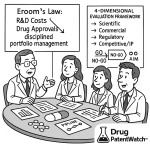
A proactive IP strategy must be integrated into the R&D process from the very beginning. Forward-thinking companies are aligning their innovation efforts with patentable outcomes, thereby turning IP from a reactive afterthought into a proactive driver of innovation and value creation.7 Beyond simple protection, strong IP portfolios are a foundation for IP-backed financing and a source of strategic growth opportunities through licensing and partnerships.7 Companies should proactively explore these monetization models to create additional revenue streams and increase investor confidence. The most powerful lever, however, is the use of advanced intelligence. Implementing advanced IP analytics and competitive intelligence tools allows a company to inform its R&D strategy, identify competitive moves, and optimize resource allocation.7 The investment in these tools is an investment in reducing the R&D burn itself, as it enables companies to make better “go/no-go” decisions and avoid costly dead ends.
Future-Proofing: Building for Resilience
To ensure long-term viability, companies must build an adaptive and resilient framework. As the regulatory and political landscape evolves, particularly with new policies and changing market access rules, companies must adapt their IP strategies to align with these shifts.19 This adaptability is crucial for navigating an increasingly complex global environment. Furthermore, a culture of continuous learning must be formalized within the organization. By establishing a formal discipline for post-mortem reviews of major capital decisions, leadership teams can systematically analyze what went right or wrong, reduce cognitive bias, and strengthen future decision-making.19
Conclusion
The capital allocation pain point is a defining challenge for the biopharma industry, a complex nexus of financial, scientific, and legal risk. The old model of a single, high-volume blockbuster is no longer a viable solution for funding sustainable innovation. The companies that will thrive in this new environment are those that move beyond a siloed, tactical approach to a holistic, strategic one. They will see capital allocation as a C-suite competency, IP as a proactive tool to de-risk R&D, and data as a guide to navigate an uncertain landscape. By embracing these imperatives, an organization can transform a chronic financial and strategic pain point into a source of durable competitive advantage that drives both innovation and long-term value creation.