In the high-stakes world of pharmaceuticals and biotechnology, intellectual property (IP) is no longer a simple legal instrument; it is the fundamental currency of innovation and investment. For the uninitiated, the patent system might seem straightforward: an innovator discloses a novel invention in exchange for a temporary, 20-year monopoly to commercialize it and recoup massive R&D costs. However, for investors and business leaders operating on a global scale, this foundational bargain has evolved into a labyrinth of conflicting regulations, complex strategies, and profound financial risks. The central pain point is the struggle to map and understand a company’s patent family across borders. This is a challenge that requires moving beyond a simple definition and into a strategic, data-driven analysis of a phenomenon known as the global patent thicket.
I. The Strategic Imperative: Why Patent Intelligence is the New Competitive Battlefield
The Deceptive Simplicity of Patent Families: A Foundational Misunderstanding
At first glance, a patent family appears to be a benign, administrative construct. It is, by definition, a collection of patent applications that cover the same or similar technical content, with each application related to the others through priority claims.1 For example, the European Patent Office (EPO) uses an automated process to create two main types of patent families: a DOCDB simple patent family, where the technical content is considered identical, and an INPADOC extended patent family, which groups applications with similar technical content.2
To a business professional, this can seem like a mere detail for the legal department. But viewing it this way is a dangerous oversimplification. The relationships within a patent family are a complex, interconnected web. One source insightfully describes the structure as a network that includes not just the “parent” applications but also “aunts, uncles, siblings, cousins, etc.”.4 This network of related applications is the raw material. The challenge, and the financial pain, arises when this network is deliberately and strategically weaponized into a “patent thicket” to extend a monopoly and deter competition.
Beyond the Legal Department: The Rise of Patent Intelligence
The era of IP strategy being a siloed, back-office function is over. Patents have transcended their role as simple legal shields and are now foundational business assets that drive company valuation, attract capital, and serve as a powerful de-risking signal in an industry defined by profound uncertainty.5 As Frank Watanabe, President and CEO of Arcutis Biotherapeutics, states with stark clarity, “Companies that invest resources on that scale need assurance that they will have the opportunity to recoup their investments. Strong intellectual property (IP) protections are critical to the pursuit of new treatments”.6
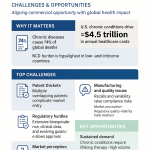
This shift is not just anecdotal; it is grounded in hard data. A landmark 2023 study by the European Patent Office and the European Union Intellectual Property Office delivered a stunning conclusion: startups that own patents and trademarks are up to 10.2 times more successful in securing early-stage funding than their counterparts without such protections.8 For venture capitalists and private equity firms, this moves the conversation from opaque legal concepts to tangible, measurable ROI. They are not merely checking a box; they are conducting rigorous IP due diligence to assess whether a startup’s portfolio offers a competitive edge and aligns with long-term commercialization goals.7 A robust IP portfolio is now the very cornerstone upon which a company’s valuation is built.6
The Unavoidable Cross-Border Challenge: Fragmentation and Friction
For any company looking to operate or invest internationally, the dream of a “one-size-fits-all” global patent system is a myth that can lead to costly mistakes.9 While international treaties like the Patent Cooperation Treaty (PCT) and the European Patent Convention (EPC) streamline the initial application process, they do not create a single global patent.10 Each country retains the authority to apply its own rules when it comes to examination, granting, and enforcement.9
This reality creates a landscape of “jurisdictional variability” and “shifting compliance rules” that complicates everything from a simple filing to a complex, multi-billion-dollar cross-border M&A deal.11 What works in the United States may be a non-starter in Europe, and what succeeds in Japan may be treated differently in China.9 For investors, this creates a significant pain point: how to map and value IP assets across a patchwork of conflicting regulations, especially when a single transaction might involve intellectual property from dozens of different jurisdictions.12 The absence of a unified, global system means that every market entry and every deal requires a deep, jurisdiction-specific analysis.
II. Deconstructing the Thicket: A Definitional and Strategic Framework
Patent Families vs. Patent Thickets: Defining the Battleground
While a patent family is a technical concept, a patent thicket is a strategic one, and understanding this distinction is the first step toward navigating the landscape.8 The term, which first appeared in litigation in the 1970s, has become synonymous with anticompetitive behavior in the pharmaceutical industry.8 The most widely cited definition comes from a 2001 paper by Carl Shapiro, who described it as “a dense web of overlapping intellectual property rights that a company must hack its way through in order to actually commercialize new technology”.8
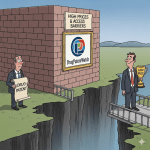
The purpose of a thicket is not to protect a single, powerful invention but to create a legal landscape so complex, so costly, and so time-consuming to navigate that would-be competitors are deterred from even attempting a challenge.14 This transforms the role of a patent from a simple shield protecting an invention into an offensive legal weapon of attrition.14 The success of the strategy lies not in the unassailable strength of any individual patent within the thicket, but in the collective, prohibitive cost of challenging the entire portfolio.14 While the pharmaceutical industry is a prime example, this phenomenon is not unique to it; the telecommunications and electronics sectors, particularly in the smartphone market, have also seen the proliferation of dense thickets that stifle innovation and increase litigation costs.15
The Building Blocks: Primary vs. Secondary Patents
To deconstruct a patent thicket, one must first understand the distinction between its two essential building blocks: primary and secondary patents. This is a critical strategic distinction.8
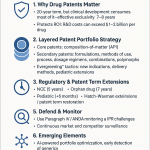
Primary Patents are the foundational intellectual property for a new medicine. They typically cover the core innovation, such as the active pharmaceutical ingredient (API)—the molecule or protein sequence that produces the therapeutic effect.8 A primary patent is usually the first to be filed, often early in the discovery phase, and its 20-year term establishes the initial period of market exclusivity.17 It is the cornerstone of the entire commercial enterprise.
Secondary Patents, in contrast, do not cover the core API but instead target a wide array of peripheral, incremental, or follow-on innovations related to the original drug.8 These are the patents that form the walls of the “fortress” and can include patents on dosage forms, manufacturing methods, new indications, or delivery methods.17 The strategic importance of these patents is profound: for top-selling drugs, a staggering 66% of patent applications are submitted
after FDA approval.17 This single fact reframes the entire debate, shifting it from one of pre-market innovation to one of post-market monopoly extension.
“Evergreening” and “Lifecycle Management” as Corporate Strategy
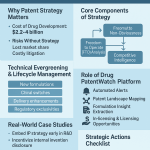
The overarching corporate strategy that uses secondary patents to build thickets is known as “evergreening”.8 From the perspective of critics, it is a deliberate effort to “artificially extend the life of a patent” to maintain monopoly pricing and block competition.8 The prevalence of evergreening has a profound effect on the trajectory of medical innovation itself. For example, some data shows that 78% of new patents protect existing drugs, not novel therapies.17 This diverts resources and talent away from the risky pursuit of new breakthroughs and toward the safer, more lucrative goal of protecting existing revenue streams.17 The classic example of this is Merck spending years patenting a subcutaneous injection method for Keytruda instead of developing new, novel drugs.17
While proponents might argue that this is simply legitimate “lifecycle management” to enhance a drug’s value, the sheer scale and strategic nature of thicket formation suggest a different objective. The core problem is not the existence of secondary patents—which can sometimes protect valuable and beneficial innovations—but the ability to leverage a single minor improvement into a thicket of dozens of overlapping patents, creating a barrier to competition that is disproportionate to the inventive contribution.8
III. The Global Divide: A Comparative Analysis of Patent Regimes
The United States: A Favorable Environment for Thickets
The United States is the epicenter of patent thickets, and this is not an accident. The prevalence and density of these thickets are a direct consequence of specific domestic policy choices that diverge sharply from those of other developed nations.14 The U.S. system is characterized by historically permissive patent examination standards at the U.S. Patent and Trademark Office (USPTO) and a willingness to grant numerous “secondary” patents for minor modifications to an existing drug.8
This framework, while ostensibly designed to foster innovation, has inadvertently created a set of perverse incentives that prioritize the extension of monopolies on existing, highly profitable drugs.14 This is further enabled by the Hatch-Waxman Act, which, while meant to spur generic competition, also contains provisions that link the filing of patent infringement lawsuits to an automatic 30-month delay in generic market entry.14 The proposed ETHIC Act, a bipartisan bill currently before Congress, aims to address this by limiting the number of patents from a single “Patent Group” that can be asserted in a patent infringement action.20 However, this bill faces strong opposition from the pro-patent community, which argues that it would weaken patent rights, threaten innovation, and “choke off the development of future cures”.20
The European Union: Stricter Standards, Structural Barriers
In stark contrast to the U.S., the European Union presents a more restrictive landscape that makes dense thickets far less common.8 The European Patent Office (EPO) applies stricter standards for both novelty and “inventive step”.8 While the U.S. evaluates “non-obviousness,” the EPO’s “inventive step” doctrine applies a different legal and philosophical test, aimed at ensuring that an invention is not merely an obvious combination of existing knowledge.22
Crucially, the EPO’s “added matter” doctrine serves as a powerful structural barrier against the proliferation of sprawling patent families from a single invention.8 This doctrine is a “gold standard” test that prevents an applicant from adding any new technical information to an application after it has been filed, even if that information was not explicitly claimed but was present in the initial description.24 This strict approach prevents the kind of incremental claim expansion that is routinely used to build large, duplicative patent families in the U.S..8 This regulatory and philosophical divergence between the two systems is the primary reason why market dynamics differ so drastically.
Feature
United States
European Union
China
Key Barrier to Secondary Patents
Permissive USPTO; high litigation costs
Stricter EPO standards; “Added Matter” doctrine
Emerging Term Compensation System
Litigation System
Unified (infringement & validity in one court)
Often Bifurcated (e.g., Germany)
Bifurcated (infringement in civil court, validity in CNIPA)
Patentability Standard
Non-obviousness
Inventive Step
Inventive Step
Example Doctrine
Double Patenting, Hatch-Waxman
Added Matter Doctrine
Patent Term Compensation
Emerging Players: China’s Evolving Role
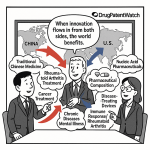
For years, the U.S. and Europe have been the central poles of the global patent discussion, but this is rapidly changing. China has emerged as a powerhouse in patenting, now accounting for a staggering 33% of global pharmaceutical patent filings.26 While its system has historically been viewed as less rigorous, it is rapidly evolving and converging with Western models.
In a landmark development, China’s new Patent Law introduced a patent term compensation system in June 2021, designed to offset delays in regulatory approval for new drug launches.28 This system, which is similar to those in the U.S. and EU, provides a maximum compensation period of five years. In a precedent-setting case in June 2025, the China National Intellectual Property Administration (CNIPA) granted a five-year extension for the core patent of a drug called Telitacicept.28 This “top extension” sets a powerful precedent, signaling a clear move toward a system that rewards innovation with extended market exclusivity and brings China’s approach closer to the Western models, which will likely lead to its own unique thicket-related challenges in the future.28
IV. Case Studies in Divergence: Humira, Keytruda, and Revlimid
The true impact of patent thickets is best understood not through legal theory, but through real-world case studies that illustrate the staggering financial and social costs.
The Humira Archetype: A Blueprint for Monopoly Extension
AbbVie’s legal fortress around its blockbuster drug Humira is the definitive case study of a patent thicket.8 The company filed over 250 patent applications and secured at least 132 to 136 granted U.S. patents.14 This impenetrable wall of patents achieved its strategic goal: it delayed the entry of biosimilar competition for five years longer in the U.S. than in Europe, where AbbVie held far fewer patents.8
The financial consequences of this delay were staggering. Estimates of the cost to the American healthcare system range from over $19 billion to as high as $80 billion to $100 billion.8 In the period leading up to biosimilar competition, Humira generated an estimated $47.5 million per day in revenue.17 This case is a powerful testament to the financial leverage of a strategically constructed patent thicket.
Drug
Number of Patents (U.S.)
Market Entry Delay
Estimated Financial Impact (U.S.)
Patient/Social Impact
Humira (AbbVie)
132-136 granted patents (out of 250+ applications)
5 years (U.S. vs. Europe)
$19B – $100B+ to U.S. healthcare system; $47.5M/day in revenue pre-biosimilar entry
Sustained high costs
Revlimid (Bristol Myers Squibb)
70+ patents
18 years (litigation process)
—
80% of patients faced treatment delays due to cost
Keytruda (Merck)
129+ patent applications
—
Projected to cost Americans over $137B during extended monopoly
Resource diversion from novel R&D
The Litigation Labyrinth of Revlimid
The Revlimid thicket, built by Bristol Myers Squibb (formerly Celgene), illustrates how the legal system itself can become the primary barrier to market entry. The company used a protracted, 18-year litigation process to block generic alternatives, even after the drug’s primary patents had expired.17 The success of this strategy lay not in the strength of any single patent, but in the collective, prohibitive cost of challenging the entire portfolio. For a generic company, having to invalidate every single patent asserted from a thicket is a daunting and financially ruinous proposition, while the brand-name company needs only one patent to be upheld to maintain its monopoly.14 The social costs of this legal maneuvering were immense: one analysis found that 80% of patients faced treatment delays due to the high cost of the drug.17
Keytruda’s “Patent Wall” and Product Hopping
Merck’s thicket around its oncology drug Keytruda, comprising at least 129 patent applications 14, illustrates a strategy known as “product hopping”—the practice of migrating patients to a new version of the drug just before a key patent expires. Critics argue that these patents, which include “trivial changes like the sterile packaging,” are a form of evergreening that diverts resources from developing new, novel therapies.17 The cost of this strategy is projected to exceed $137 billion for Americans during the extended monopoly.17
V. From Data to Due Diligence: Mapping the Global Landscape
In today’s complex environment, a reactive approach to patent management is a recipe for disaster. For investors and business development teams, a proactive, data-driven approach is essential for mitigating risk and identifying opportunities.
Simplifying Complexity: Methodologies for Cross-Border Analysis
The starting point for any strategic analysis is a comprehensive patent landscape analysis.30 This is more than a simple prior art search; it is a full-scale mapping exercise that provides a roadmap for business strategy. It helps to:
Discover Untapped Opportunities: By identifying “white spaces”—areas with little or no patent activity—a company can focus its R&D efforts on less-competitive fields, potentially leading to groundbreaking innovations.31
Mitigate Risks: An analysis maps out which areas are already protected, helping companies avoid costly lawsuits and potential infringement issues before they ever launch a product.31
Understand Competitor Strategies: Patents provide an unparalleled window into a competitor’s innovation strategy.31 By monitoring their filings, a company can anticipate future moves and plan accordingly.
Since “innovation knows no borders,” this analysis must be global to get a complete picture of a given technology area.31
The Investor’s IP Due Diligence Checklist
For any cross-border M&A or venture financing deal, IP is often “the real prize”.12 However, the valuation of that prize is only as strong as the due diligence performed. The danger of “chain-of-title breaks” is a significant cross-border risk, where a messy or incomplete ownership history can be a “fatal” flaw that causes foreign authorities to refuse to record a patent assignment.12 To mitigate these risks, a rigorous due diligence process is non-negotiable.13 The following checklist, informed by a venture capital perspective, provides a framework for evaluating a company’s IP portfolio 7:
Category
Key Questions for Due Diligence
Patent Portfolio Strength
Do they have a granted composition of matter patent in key markets (U.S., EU, Japan, China)? How broad are the claims? Are the patents likely to withstand a legal challenge?
Freedom to Operate (FTO)
Have they conducted a thorough FTO analysis to identify potential conflicts? What is the likelihood of licensing requirements or legal challenges from competitors?
Competitive Positioning
How does their patent portfolio stack up against existing players? Have they built a layered “fortress” of protection? What is the remaining lifespan of the portfolio?
Ownership and Documentation
Is the chain of title clear and undisputed? Have inventors and founders properly assigned IP to the company? Are all licensing agreements well-documented?
This approach recognizes a profound paradox: while advanced tools can map out the forward-looking landscape, they cannot fix historical legal sloppiness. This means that a sophisticated IP strategy is only as strong as its most mundane, back-office documentation.11
The Toolkit: Leveraging Patent Intelligence Platforms
In a world where hundreds of thousands of new patents are filed each quarter, manual analysis is insufficient.26 Companies that leverage advanced data analytics are positioned to gain a decisive competitive edge.11 Modern patent intelligence platforms have transformed this process by automating key functions. Tools like PatSnap and IPRally offer AI-driven analysis, semantic search, and citation network analysis to help users visualize innovation activity and identify relationships.36 Platforms such as Anaqua integrate patent management with analytics, allowing for automated docketing, workflow prompts, and portfolio-wide reporting.38
For the pharmaceutical and biotech industries, platforms like DrugPatentWatch are uniquely positioned to address the cross-border pain point. The platform provides the ability to track US and International Patents, monitor Loss-of-Exclusivity (LOE) dates, and follow Paragraph IV Challenges for both small molecules and biologics.14 This transforms raw patent data into actionable market intelligence, allowing investors and business development teams to identify “undervalued companies with powerful, overlooked patent portfolios” and “predict market-shaking events like the ‘patent cliff’ with remarkable accuracy”.35
VI. The Strategic Playbook: Turning Patent Data into Advantage
The final step is to translate these insights into a strategic playbook for a variety of professional roles. Patent data is no longer just for lawyers; it is a “strategic compass” that guides every critical business decision.33
For R&D Teams: Identifying White Space and De-risking Pipelines
For R&D teams, patent data is the world’s largest, most up-to-date repository of technological intelligence. By analyzing competitor filings, a team can avoid “me-too” traps and identify novel approaches to a problem.33 This goes beyond a simple prior art search; it’s about anticipating future competitive moves and proactively de-risking a pipeline. This strategic use of data helps ensure that R&D resources are focused on areas of genuine invention rather than incremental, non-obvious improvements.
For Business Development & M&A: Valuing and Acquiring Portfolios
In cross-border transactions, intellectual property is often the “real prize” that justifies a deal’s value.12 The “IP onion” or “fortress” strategy—where a company layers its defenses with primary and secondary patents—is a powerful signal to a potential acquirer that the asset is well-protected and its revenue stream is durable.6 Business development teams must be able to recognize and value this structure, ensuring they are not acquiring a single point of failure but a resilient, layered defense system.
For Investors: Predicting the Patent Cliff and Gauging a Company’s Moat
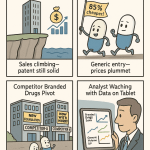
The impending “patent cliff,” threatening over $230 billion in U.S. revenue alone in the coming years, has made IP analysis a top priority for investors.6 A company with a weak secondary patent portfolio will see its revenues plummet post-expiration.35 By analyzing a company’s “evergreening” strategy, an investor can predict the steepness of its post-expiration revenue decline and gauge the true strength of its competitive moat.35 A single, expiring patent is a point of failure, but a fortress of well-documented, globally-mapped IP assets signals durability and a prolonged period of revenue.
VII. Key Takeaways
The complexity of global patent thickets and cross-border patent families is not a technical problem for lawyers alone; it is a core business pain point with profound implications for R&D, business development, and investment. Navigating this landscape requires a strategic shift, transforming patent data from a legal afterthought into a central source of competitive intelligence.
The defining characteristic of patent thickets is their purposeful construction for anticompetitive ends, a phenomenon most pronounced in the U.S. due to its unique legal framework and permissive examination standards. This contrasts sharply with the stricter, more harmonized standards of the European Union, which prevent the kind of incremental claim expansion used to build sprawling patent families. The economic cost of this divergence is staggering, amounting to billions of dollars in excess healthcare spending and years of market delays, as demonstrated by the Humira and Revlimid case studies.
For business leaders and investors, the solution is not to avoid the landscape but to master it. This requires a proactive, data-driven approach, leveraging patent landscape analysis and intelligence platforms to de-risk investments, identify market opportunities, and strategically protect assets. A company’s IP portfolio is its most valuable asset, and in an interconnected global market, its value is only realized when its cross-border complexity can be simplified, mapped, and understood.
VIII. Frequently Asked Questions
What is the difference between a simple patent family and a patent thicket?
A patent family is a technical concept—a collection of patent applications that cover the same or similar technical content and are related by priority claims.1 A patent thicket, by contrast, is a strategic concept. It is a dense, overlapping web of patents deliberately constructed to create a complex and costly legal barrier to entry for competitors, even if some of the individual patents within the thicket are weak.8
Why are patent thickets more common in the U.S. than in Europe?
The prevalence of patent thickets in the U.S. is a direct consequence of specific domestic policy choices. The U.S. Patent and Trademark Office (USPTO) has historically been more permissive in granting numerous secondary patents for incremental improvements.8 In contrast, the European Patent Office (EPO) applies stricter standards for “inventive step” and enforces a rigid “added matter” doctrine, which serves as a powerful structural barrier against the expansion of patent families from a single invention.8
How do patent thickets financially impact generic and biosimilar companies?
The primary financial impact of a patent thicket on a generic or biosimilar manufacturer is the immense cost of litigation. A thicket forces a challenger to invalidate dozens, or even hundreds, of overlapping patents, which can be financially ruinous.14 This creates a system where the cost of seeking justice often exceeds the potential reward of market competition, fundamentally undermining the principles the law is intended to uphold.14
Is “evergreening” a legitimate strategy or an abuse of the patent system?
This is a central and contentious debate. From a business perspective, evergreening is considered a form of “lifecycle management”—a legitimate strategy to protect and enhance the value of an asset throughout its lifespan.8 From the perspective of critics, however, it is a “systemic abuse” that uses weak, incremental patents to artificially extend a monopoly, thereby inflating drug prices and blocking competition for years.8 The Merck case study with Keytruda, where resources were diverted to patenting minor changes, is often cited as an example of this abuse.17
How can an investor or M&A professional assess the strength of a patent portfolio during due diligence?
Beyond simply confirming the existence of patents, an investor must conduct a rigorous, layered analysis. This involves scrutinizing the portfolio for a strong core “composition of matter” patent in key markets, evaluating the breadth of its claims, and assessing whether a comprehensive freedom-to-operate (FTO) analysis has been conducted.7 It is also critical to verify the ownership history of the patents, as a “chain-of-title break” can be a fatal flaw in a cross-border transaction.12 A well-constructed IP portfolio acts as a powerful de-risking signal, and its strength is a key indicator of a company’s long-term commercial viability.6