The business model of the innovative pharmaceutical industry is built upon a foundational pact: in exchange for the immense risk, time, and capital invested in developing a new medicine, society grants a finite period of market exclusivity. This exclusivity, underpinned by patents and regulatory protections, allows companies to recoup their investments and fund the next generation of therapies.1 However, this period is, by design, temporary. The expiration of these protections, an event known as Loss of Exclusivity (LOE), triggers a market transformation of seismic proportions. This report provides a comprehensive framework for understanding, modeling, and strategically responding to this critical phase in a drug’s lifecycle.
Section 1.1: Deconstructing Loss of Exclusivity (LOE): Beyond the Metaphor
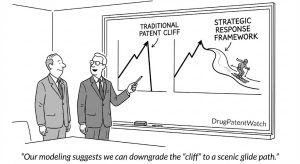
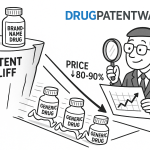
The term “patent cliff” has become a ubiquitous colloquialism in the pharmaceutical industry, evoking the image of a blockbuster drug’s revenue stream plummeting into a chasm of generic competition.1 It aptly captures the sharp, sudden, and often catastrophic decline in revenue that a company experiences when a high-value product loses its monopoly status.5 This is not merely an internal concern for a single company; it is a recurring, predictable, and market-shattering phenomenon that represents a massive, multi-billion-dollar transfer of wealth from innovator firms to generic manufacturers, payers, and patients.2
Quantifying the Economic Scale
The financial stakes associated with the current and upcoming wave of patent expirations are staggering. Industry-wide analyses project that between 2025 and 2030, nearly 70 high-revenue products will face patent expiration, putting a colossal $236 billion in annual revenue at risk.5 Other estimates place the figure even higher, with over $200 billion to $350 billion in annual branded drug sales at risk globally through the end of the decade.8 This wave of expirations will impact approximately 190 drugs, 69 of which are classified as “blockbusters”—medicines generating over $1 billion in annual sales.12 For a company heavily reliant on a single such product, the patent cliff can represent an existential threat, capable of eroding 80-90% of a drug’s revenue within the first year of generic entry.5 This looming precipice forces companies to aggressively restock their pipelines by investing in research and development (R&D), licensing experimental therapies, or acquiring other drugmakers.5 The “cliff” is therefore the climax of a prolonged period of strategic warfare that begins years before the patent expires and continues long after.5
Historical Perspective and Evolution
The concept of the patent cliff gained prominence during the early 2010s, a period that witnessed a concentrated wave of expirations for some of the best-selling small-molecule drugs in history, such as Pfizer’s Lipitor (atorvastatin), Bristol-Myers Squibb and Sanofi’s Plavix (clopidogrel), and Merck’s Singulair (montelukast).6 These chemical-based drugs were relatively easy to replicate, and upon patent expiry, they were quickly replaced by low-cost, chemically identical generics, leading to a rapid and severe revenue collapse for the innovator companies.8
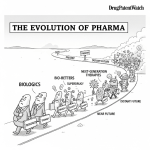
The current wave of LOE, however, presents a different and more complex dynamic. It is dominated not by small molecules, but by biologics—large, complex medicines derived from living cells.8 Blockbusters such as AbbVie’s Humira (adalimumab), Merck’s Keytruda (pembrolizumab), and Bristol Myers Squibb’s Opdivo (nivolumab) are at the forefront of this new cliff.8 Unlike generics, the copies of these drugs, known as biosimilars, are not identical and face higher barriers to development and market entry. This fundamental difference is reshaping the very nature of the patent cliff, transforming it from a sharp, predictable drop into a more gradual and variable “slope” of revenue erosion.
This evolution demands a more sophisticated approach to strategic planning and financial modeling. The term “patent cliff,” coined in an era of small-molecule dominance, can be a misnomer in the modern biopharmaceutical landscape. The scientific properties of a drug—whether it is a small, chemically synthesized molecule or a large, biologically derived protein—directly influence the regulatory pathway for its competitors. Small molecules face generic competition via an abbreviated pathway that requires only a demonstration of bioequivalence.5 This process is relatively fast and inexpensive, leading to the rapid entry of multiple competitors and a swift price collapse.
Biologics, in contrast, are large and complex, making exact replication impossible. Their competitors, biosimilars, must undergo a more rigorous and costly regulatory process to demonstrate that they are “highly similar” to the reference product with no clinically meaningful differences.19 This higher barrier to entry naturally limits the number of competitors and slows the timeline of their arrival. Furthermore, market adoption dynamics differ significantly. Generic small molecules are often automatically substitutable at the pharmacy level. Biosimilars, particularly those lacking a specific “interchangeability” designation from the U.S. Food and Drug Administration (FDA), typically require a new prescription from a physician, who may be reluctant to switch a patient who is stable on the original biologic.9 This combination of scientific, regulatory, and commercial factors results in a slower, more protracted erosion of revenue for biologics compared to the precipitous fall experienced by small molecules. Consequently, a single, one-size-fits-all “patent cliff model” is obsolete. Effective analysis requires a bifurcated framework, with distinct models and assumptions for small molecules and biologics. A more precise term for the phenomenon is “Loss of Exclusivity (LOE) Impact,” which better captures the strategic nuance required to navigate this transition in the modern era.
Section 1.2: The Regulatory and Legal Bedrock
To accurately model the financial impact of LOE, one must first master the complex and interwoven system of legal and regulatory protections that define a drug’s period of market monopoly. This system is not a single wall but a multi-layered defense comprising distinct forms of intellectual property and FDA-granted exclusivities. The true date of generic or biosimilar entry is not determined by a single patent’s expiration but by the collapse of the final barrier in this defensive structure.7
The Dual System of Protection: Patents and Exclusivities
A common misconception is that a drug patent grants a 20-year market monopoly from the date of launch. In reality, the system is far more complex, involving two separate but overlapping forms of protection granted by two different government agencies.5
Patents: Granted by the U.S. Patent and Trademark Office (USPTO), patents provide the right to exclude others from making, using, or selling an invention for a term of 20 years from the date of the earliest non-provisional patent application filing.1 A significant portion of this term, often 10 to 15 years, is consumed by preclinical research, clinical trials, and regulatory review, meaning the effective market life of a drug under patent protection is typically much shorter, averaging only 7 to 12 years.7 Innovator companies do not rely on a single patent; they construct a defensive portfolio, often called a “patent thicket,” which includes:
Composition of Matter Patents: The crown jewels of pharmaceutical IP, these patents cover the active drug molecule itself and provide the broadest and strongest protection.7
Secondary Patents: These are layered on top of the core patent and can cover new formulations (e.g., extended-release versions), methods of use (i.e., treating a specific disease), specific dosage regimens, or novel manufacturing processes.5 These patents are a key tool in lifecycle management and can extend a drug’s protection long after the original composition of matter patent expires.
Regulatory Exclusivities: Granted by the FDA upon a drug’s approval, these exclusivities are separate from patents and are designed to incentivize certain types of drug development. They prevent the FDA from approving a generic or biosimilar application for a set period, regardless of the patent status.7 Key types include:
New Chemical Entity (NCE) Exclusivity: Provides 5 years of market exclusivity for drugs containing an active ingredient never before approved by the FDA.7
Orphan Drug Exclusivity (ODE): Provides 7 years of exclusivity to incentivize the development of drugs for rare diseases (affecting fewer than 200,000 people in the U.S.).7
Pediatric Exclusivity: Grants an additional 6 months of exclusivity, which is added to any existing patents and other exclusivities, as a reward for conducting studies of the drug in children.7
The strategic planning for a generic launch is dictated by a critical rule: the first legal opportunity for market entry is determined by whichever barrier—the last-to-expire relevant patent or the last-to-expire applicable exclusivity—falls last.7
The Architects of Competition: Hatch-Waxman and BPCIA
Two landmark pieces of legislation created the modern competitive landscape for off-patent drugs in the United States.
The Drug Price Competition and Patent Term Restoration Act of 1984 (Hatch-Waxman Act): This act fundamentally rewired the economics of the small-molecule drug industry.5 It struck a critical balance: to encourage generic competition, it created the Abbreviated New Drug Application (ANDA) pathway, allowing generic firms to rely on the innovator’s original safety and efficacy data.5 To incentivize challenges to weak patents, it granted a lucrative 180-day period of market exclusivity to the first generic company to file an ANDA with a “Paragraph IV certification,” which alleges that the innovator’s patents are invalid or not infringed.5 As a concession to innovators, the act also created patent term extensions to restore some of the time lost during the FDA review process.11 The impact of Hatch-Waxman cannot be overstated; in 1984, generics accounted for 19% of U.S. prescriptions. Today, that figure is over 90%.5
The Biologics Price Competition and Innovation Act of 2010 (BPCIA): Recognizing that the Hatch-Waxman framework was unsuitable for complex biologics, the BPCIA created an abbreviated licensure pathway for biosimilars, codified as 351(k) of the Public Health Service Act.2 This pathway is more complex and demanding than the ANDA process, requiring a “totality of the evidence” to demonstrate biosimilarity.25 The BPCIA also granted innovator biologics a generous 12 years of data exclusivity from the date of first licensure, a longer period than that for small molecules, and established a complex, highly structured process for exchanging patent information and litigating disputes known as the “patent dance”.2
The legal framework is not a passive set of rules but an active battleground where strategic decisions can create billions of dollars in value. Companies like AbbVie, with its blockbuster drug Humira, have masterfully used this system to prolong market exclusivity. Their strategy involved layering the core product with over 250 secondary patents covering new indications, formulations, and manufacturing methods.8 When biosimilar challengers emerged, AbbVie initiated a cascade of patent infringement lawsuits. Under the BPCIA and Hatch-Waxman frameworks, such litigation can trigger automatic stays on FDA approval, effectively creating a series of delays that, in Humira’s case, extended its U.S. monopoly for seven years beyond the expiration of its primary patent.2 This was further solidified through strategic settlements, where AbbVie granted licenses to biosimilar manufacturers for market entry on a staggered, predetermined schedule, creating a predictable—albeit significantly delayed—LOE timeline.22 This demonstrates that a simplistic LOE model based on a single patent’s expiration date is fundamentally flawed. An accurate model must be probabilistic, treating the LOE date not as a fixed point but as a distribution of potential outcomes influenced by the strength of the entire patent estate, the progress of ongoing litigation, and the likelihood of strategic settlements.
The Central Role of the FDA Orange Book
For small-molecule drugs, the FDA’s publication, Approved Drug Products with Therapeutic Equivalence Evaluations, commonly known as the Orange Book, is the definitive public resource and a critical data source for LOE modeling.29 It lists all FDA-approved drugs and identifies the patents and regulatory exclusivities that innovator companies assert cover their products.29 Analysts and generic competitors meticulously scan the Orange Book to:
Identify all patents associated with a target brand-name drug and their expiration dates.32
Determine the status of regulatory exclusivities that may block generic approval.31
Track “Paragraph IV certifications,” which are the first public signal that a generic company is challenging an innovator’s patents.33
Monitor the approval of new generic drugs and their therapeutic equivalence (TE) codes, which determine if they can be automatically substituted for the brand.31
The Orange Book is updated daily with new approvals and monthly with other data, making it an essential, near-real-time source of competitive intelligence for building and refining LOE models.30
Part II: The Modeler’s Toolkit: A Quantitative and Qualitative Framework
Constructing a robust, multi-year LOE impact model is a multi-disciplinary exercise that blends rigorous data science with nuanced strategic analysis. It requires the synthesis of disparate data sources, the application of appropriate forecasting methodologies tailored to the specific drug type, and the integration of qualitative factors that shape market dynamics. This section provides a detailed blueprint for this process.
Section 2.1: Assembling the Data Inputs
The accuracy of any predictive model is contingent on the quality and comprehensiveness of its inputs. An effective LOE modeling process requires a dedicated intelligence-gathering function that continuously monitors and synthesizes data from legal, regulatory, financial, and commercial sources.
Sourcing and Interpreting Patent Data
The foundation of the model is a precise understanding of the intellectual property landscape.
USPTO Databases: The primary source for patent information is the USPTO. Using its Patent Public Search tool and Patent Application Information Retrieval (PAIR) system, analysts can determine a patent’s statutory expiration date.35 This calculation starts with the 20-year term from the earliest non-provisional filing date and is then adjusted for any Patent Term Adjustment (PTA), which compensates for delays during the patent prosecution process, or Patent Term Extension (PTE), which restores time lost during FDA review.36
SEC Filings: Publicly traded pharmaceutical companies are required to disclose material risks to their business in their SEC filings (e.g., Form 10-K annual reports and 10-Q quarterly reports). These documents are a rich source of contextual information, often explicitly discussing the patent status of key revenue-generating products, ongoing litigation, and potential LOE timelines.33 This provides management’s perspective on the IP risks, which is invaluable context for a modeler.39
Specialized Intelligence Platforms: Commercial services like DrugPatentWatch offer significant efficiency gains by aggregating and curating this complex data. These platforms consolidate U.S. and international patent data, regulatory status from the FDA, litigation updates, and corporate filings into a single, searchable database, streamlining the data collection process and providing alerts on key events.41
Financial and Market Data Aggregation
To quantify the financial impact of LOE, the model requires a solid baseline of the drug’s commercial performance.
Company Financials: Product-level revenue figures, typically found in a company’s annual reports or investor presentations, are essential for determining the drug’s contribution to total sales (revenue concentration) and establishing the scale of the revenue at risk.43
Prescription and Sales Data: Third-party data providers such as IQVIA (formerly IMS Health) are the industry standard for detailed market data. They provide metrics like total prescriptions dispensed, new prescriptions, market share within a therapeutic class, and pricing information at various levels, such as the Wholesale Acquisition Cost (WAC) and the Average Sales Price (ASP).44 This data is critical for establishing pre-LOE trends and calibrating the erosion forecast.
Competitive Intelligence and Event Tracking
The timing of LOE is an event-driven process that requires active monitoring.
FDA Resources: The FDA Orange Book is the primary source for tracking events that signal impending competition for small molecules. The first indication of a challenge is often the innovator company’s disclosure of receiving a Paragraph IV notice letter, which must be reported to the FDA.33 Subsequently, the FDA’s database of ANDA approvals provides the definitive signal of a generic launch.31 For biologics, a similar process involves monitoring Biologics License Application (BLA) approvals.
Litigation Dockets: Patent challenges almost invariably lead to litigation. Following these cases through federal court docket systems (e.g., PACER) is necessary to assess the strength of the legal arguments, track key rulings, and anticipate the likelihood of an early generic entry (if the generic wins) or a settlement.2
The necessity of synthesizing these varied inputs cannot be overstated. No single source tells the whole story. The USPTO provides a patent’s theoretical expiration date, but this is merely a starting point.36 The FDA Orange Book reveals which of those patents the innovator is actively using to defend its product, narrowing the field of relevant IP.31 Court dockets and press releases then show which of those asserted patents are being challenged and how those challenges are progressing.33 Finally, a company’s own SEC filings or investor calls may disclose a settlement agreement that establishes a definitive, negotiated market entry date for a competitor, a date that supersedes all other timelines and becomes the most commercially relevant input for the model.33 A robust modeling process, therefore, relies on the continuous triangulation of these sources, treating the model not as a static calculation but as a living forecast that evolves with new intelligence.
Section 2.2: Quantitative Forecasting Models for Revenue Erosion
With a comprehensive dataset assembled, the next step is to apply quantitative methods to forecast the post-LOE revenue trajectory. The choice of model depends critically on whether the drug in question is a small molecule or a biologic, as their market dynamics are fundamentally different.
Modeling the Small-Molecule Cliff
The revenue erosion for small-molecule drugs following generic entry is characterized by a rapid and deep decline in both price and market share.
Price Erosion Curves: The most direct method for forecasting is to use empirically derived price erosion curves based on historical data. Numerous studies have shown a strong, predictable correlation between the number of generic competitors and the magnitude of the price reduction.45 The entry of the first generic (often with 180-day exclusivity) may result in a modest price drop. However, with the entry of a second and third competitor, a “competitive collapse” begins, and prices fall rapidly.7 In markets with 10 or more competitors, prices can decline by 70% to 90% relative to the pre-generic brand price within two to three years.11 The model must first forecast the number of entrants over time and then apply the corresponding price erosion percentage.
Time-Series Forecasting: Statistical methods can be used to forecast the volume of prescriptions. Models such as ARIMA (AutoRegressive Integrated Moving Average) and Holt’s Exponential Smoothing are well-suited for this task. They analyze the historical trend and seasonality of the branded drug’s prescription data to project its future decline, while a separate model can forecast the uptake of the generic.47 For short-term (annual) forecasts of branded drug decline, ARIMA models have shown high accuracy, while Holt’s method is often more accurate for forecasting the growth of the new generic product.47
Diffusion Models: These models, borrowed from marketing science, treat the launch of a generic as the introduction of a new product. The Bass Diffusion Model and the Repeat Purchase Diffusion Model (RPDM) can be used to model the rate of adoption of the generic among physicians and patients, capturing the S-shaped curve of uptake over time.47
Modeling the Biologic “Slope”
The erosion curve for biologics is typically shallower and more protracted than for small molecules, requiring a different modeling approach.
Nuances of Biosimilar Uptake: The initial price discount for a biosimilar is often much smaller, in the range of 15% to 40%, compared to the steep cuts for generics.49 The erosion of the reference product’s market share is also more gradual, as physicians may be hesitant to switch stable patients and payers may not immediately enforce substitution.9
Key Drivers of Adoption: A biosimilar uptake model must incorporate variables that are less relevant for small molecules. These include the biosimilar’s interchangeability status (which allows for pharmacy-level substitution), physician sentiment and trust in biosimilars within a specific therapeutic area, and the complexity of reimbursement systems.9 For provider-administered drugs under the “buy-and-bill” model, reimbursement mechanics can create perverse financial incentives that favor the higher-priced originator biologic, slowing biosimilar adoption.25
Budget Impact Models (BIMs): A common approach is to build a BIM from the perspective of a health payer.52 This model forecasts the total cost savings to the health system under various scenarios. The key inputs are the size of the patient population, the price of the reference biologic and the biosimilar, and the projected conversion rate (the percentage of patients who switch to the biosimilar) over several years. The model can also incorporate potential offsets to savings, such as increased healthcare visits or lab tests associated with non-medical switching.52
The single most powerful predictive variable across both small-molecule and biologic models is the number of competitors. For a small molecule, the transition from a monopoly (one brand) to a duopoly (one brand, one generic) involves strategic pricing. The transition to an oligopoly (3-5 players) triggers intense price competition. Finally, a saturated market (10+ players) drives the price down toward the marginal cost of production.44 For biologics, while the price curve is less steep, the same principle holds: the entry of a second or third biosimilar puts significantly more downward pressure on the price of both the reference product and the first biosimilar. Therefore, a core component of any robust LOE model must be a sub-model dedicated to forecasting the timing and number of competitor entries, based on factors like market size, manufacturing complexity, and the status of patent litigation.
Advanced Financial Modeling Techniques
To capture the inherent uncertainty of the LOE process, more sophisticated financial modeling techniques can be employed.
Monte Carlo Simulation: Rather than using single-point estimates for key variables, a Monte Carlo simulation defines them as probability distributions. For example, the LOE date might be modeled as a range of possible dates based on litigation outcomes, the number of competitors in year one could be a discrete probability distribution, and the price erosion rate could be a normal distribution around a mean.53 By running thousands of iterations, the model generates a probability distribution of future revenue, allowing strategists to understand the range of potential outcomes and quantify risks (e.g., the probability that revenue will fall below a certain threshold).53
Real Options Analysis: This framework values managerial flexibility in the face of uncertainty. It treats strategic decisions—such as investing in a new clinical trial for a follow-on product or acquiring a biotech company—as financial options.53 An impending patent cliff on a major product creates uncertainty about future cash flows. A real options model can calculate the value of waiting for more information (e.g., the outcome of a key lawsuit) before committing capital to a mitigation strategy. This allows for a more dynamic and value-driven approach to capital allocation compared to traditional net present value (NPV) analysis.53
Section 2.3: Integrating Qualitative Variables for Model Refinement
Quantitative models provide the mathematical structure for the forecast, but their accuracy is significantly enhanced by integrating qualitative factors that capture the nuances of market behavior. These variables help to define the specific shape of the revenue erosion curve for a particular drug.
The Human Factor: Brand Equity and Switching Costs
Brand Loyalty: In many chronic diseases, such as autoimmune conditions or mental health disorders, patients and their physicians develop a strong attachment to a brand-name drug that has proven effective and well-tolerated.54 This “brand stickiness” creates a barrier to switching, especially when the alternative is a biosimilar that is not automatically substitutable. This can be modeled as a lower initial rate of market share erosion compared to a drug with low brand equity, like an antibiotic used for an acute infection.56
Patient Support Programs: Innovator companies often invest heavily in “wrap-around” services, such as dedicated nurse support, insurance reimbursement assistance, and co-pay offset programs.6 These programs create significant value for patients and can be a powerful differentiator against generic competitors who typically do not offer such support. The value of these programs can be factored into the model as a variable that increases patient retention and slows the rate of decline.27
The Manufacturing Moat: Complexity as a Barrier
Technical Hurdles: The ease or difficulty of manufacturing a drug is a critical determinant of the competitive landscape. Simple oral solid dosage forms (pills) have low barriers to entry and attract numerous competitors. In contrast, complex products like long-acting injectables, metered-dose inhalers, transdermal patches, or large-molecule biologics require specialized expertise, sophisticated facilities, and significant capital investment.7 This manufacturing complexity acts as a natural moat, limiting the number of potential competitors and delaying their market entry. This can be modeled as a lower number of entrants and a longer time lag before the full impact of competition is felt.58
Supply Chain Integrity: Many biologics are temperature-sensitive and require an uninterrupted “cold chain” for distribution and storage.3 Establishing and validating such a supply chain is a significant operational and financial hurdle for new entrants, further narrowing the competitive field and supporting a more gradual revenue erosion for the innovator.
The Payer Gauntlet: Market Access and Reimbursement
In the U.S. market, Pharmacy Benefit Managers (PBMs) and health insurers wield immense power to direct market share.
Formulary Placement: PBMs manage drug formularies for health plans and can use a variety of tools to drive utilization towards lower-cost alternatives. These include placing the generic or biosimilar in a preferred formulary tier with a lower patient co-pay, excluding the branded drug from the formulary altogether, or requiring “step therapy” (where a patient must try and fail on the generic first) or “prior authorization” for the brand.25 The aggressiveness of these tactics can be modeled as a factor that dramatically accelerates the rate of market share erosion.
Rebate Dynamics: A key defensive strategy for innovators, particularly with biologics, is the “rebate wall.” The innovator may offer substantial rebates to a PBM on the branded product in exchange for preferred or exclusive formulary placement, effectively blocking or disadvantaging a new biosimilar competitor.50 This can create a situation where the net price to the PBM is lower for the brand, even if the biosimilar has a lower list price. This dynamic can significantly slow biosimilar uptake and must be incorporated into any realistic model of the biologic “slope.”
These qualitative factors are what differentiate one patent cliff from another. While the number of competitors largely determines the ultimate depth of the price decline, these factors determine the shape and timing of that decline. For example, GSK’s asthma drug Advair had a complex, patented delivery device (the Diskus) that was difficult for generic manufacturers to replicate. This qualitative barrier resulted in a long, shallow erosion curve—a “soft landing” rather than a cliff—for years after its primary patent expired.26 In stark contrast, Pfizer’s Lipitor was a simple oral pill with relatively low brand loyalty in a market where PBMs were eager to capture savings. This led to a classic, near-vertical revenue drop.18 A sophisticated LOE model uses these qualitative inputs to modulate the parameters of its quantitative equations, allowing it to forecast not just the final outcome, but the multi-year trajectory of the decline—a far more nuanced and actionable forecast for strategic planning.
Part III: From Model to Action: Strategic Applications and Case Studies
A multi-year LOE impact model is not an academic exercise; it is a critical strategic tool. Its outputs provide the quantitative foundation for multi-billion-dollar decisions regarding a company’s future. This section explores how the forecasts generated by these models are translated into actionable strategies for innovator companies and provides detailed case studies of how these strategies have played out in the real world.
Section 3.1: The Innovator’s Playbook: Defending the Franchise
For an innovator company, the LOE model serves as the central nervous system for late-stage lifecycle strategy. It quantifies the impending threat and provides a framework for evaluating the potential impact of various defensive maneuvers.
Lifecycle Management (LCM) / “Evergreening”
Lifecycle management encompasses a suite of tactics designed to extend the commercial life and value of a drug franchise beyond the expiration of its core patents. The LOE model is used to assess the potential return on investment for each LCM initiative.
Product Line Extensions: This is a classic LCM strategy. By developing a new version of the drug, an innovator can obtain new patent protection and create a new value proposition for patients and prescribers. Examples include creating an extended-release formulation to reduce dosing frequency, developing a new delivery system like a subcutaneous auto-injector for a previously intravenous drug, or conducting new clinical trials to get the drug approved for a new indication.15 The LOE model helps answer the critical question: will the projected revenue from the new, patented product be sufficient to offset the precipitous decline of the original product as it faces generic competition?.60
Authorized Generics (AGs): In this strategy, the innovator company markets its own generic version of its drug, either directly or through a subsidiary or licensing partner.60 This allows the innovator to compete on price and capture a portion of the generic market that would otherwise be lost.5 It can also serve as a deterrent; the threat of an innovator launching an AG can make the market less attractive to potential generic competitors. An LOE model can simulate the complex financial trade-offs of this strategy, weighing the revenue gained from the AG against the accelerated cannibalization of the high-margin branded product.5
Rx-to-OTC Switch: For drugs with a well-established safety profile, switching from prescription (Rx) to over-the-counter (OTC) status can be a viable strategy.23 This move opens up a much larger consumer market and creates a new revenue stream, albeit at a lower price point and with higher marketing costs. The model can be used to compare the forecasted revenue from a high-volume OTC business against the complete loss of the prescription business to generics.56
Pipeline Prioritization and Business Development
Perhaps the most critical application of LOE modeling is in guiding long-term capital allocation to ensure the company’s future growth.
Quantifying the “Growth Gap”: The primary output of a multi-year LOE model is a forecast of the revenue shortfall—the “growth gap”—that the company will face in the years following the patent cliff.62 This quantified gap becomes the explicit target that the company’s R&D and business development functions must fill to meet long-term financial goals.64
Driving R&D Strategy: An impending, multi-billion-dollar revenue gap forces a rigorous and unsentimental re-evaluation of the internal R&D pipeline.23 Projects with the highest probability of success and the potential to launch near the LOE date are prioritized and accelerated. Conversely, riskier or earlier-stage programs may be de-prioritized or terminated to conserve capital for more immediate needs.64
Informing Mergers & Acquisitions (M&A) and Licensing: When the internal pipeline is insufficient to fill the growth gap, companies turn to external innovation. A company facing a large and imminent patent cliff is almost always an active player in the M&A market.7 The LOE model defines the size, timing, and urgency of the need, guiding the search for acquisition targets. The ideal target is often a smaller biotech company with a promising late-stage asset that can be acquired and launched to replace the lost revenue.10
Communicating the Strategy to Investors
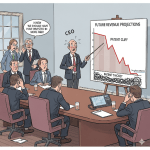
Financial markets are forward-looking, and a company’s stock price often begins to decline 12 to 24 months before a major patent expiration as analysts and investors price in the expected revenue loss.43 Therefore, managing investor expectations is a critical component of navigating a patent cliff.
Transparency and Credibility: A well-constructed LOE model provides the basis for transparent and credible communication with the investment community.2 Instead of vague assurances, management can present a data-driven narrative that acknowledges the scale of the challenge and outlines a clear, quantifiable plan to address it.5
Building the Narrative: The communication strategy involves presenting the LOE forecast and then detailing the specific initiatives—key pipeline assets, recent acquisitions, and LCM strategies—that are projected to fill the resulting revenue gap.56 A successful narrative can stabilize the company’s stock price and maintain investor confidence through the transition period.
Ultimately, LOE modeling transforms corporate strategy from a reactive posture to a proactive one. Companies that successfully navigate patent cliffs do not wait for the revenue to decline before acting; they begin their strategic planning 5 to 7 years in advance, often when the drug is still in its growth phase.5 A long-range LOE model provides the crucial early warning that enables this forward-looking approach. It allows management to proactively allocate capital to M&A or R&D and to strategically sequence LCM initiatives—for example, launching a new indication two years before LOE to begin converting patients, followed by a new formulation one year before—creating a “bridge” of revenue to soften the landing. In this way, the LOE model becomes the central coordinating mechanism for a company’s entire late-stage lifecycle strategy, turning a predictable threat into a managed and survivable transition.
Section 3.2: Case Study Deep Dive: Contrasting Fates
The principles of LOE modeling and strategy are best understood through the lens of historical examples. The contrasting fates of major blockbuster drugs that have gone over the cliff provide invaluable lessons in what to do—and what not to do.
The Cautionary Tale: Pfizer’s Lipitor (Small Molecule)
Pfizer’s cholesterol drug Lipitor (atorvastatin) represents the archetypal “perfect cliff” for a small-molecule blockbuster and serves as a cautionary tale about the limits of defensive strategies in the face of overwhelming generic competition.17 At its peak, Lipitor was the world’s best-selling drug, generating nearly $13 billion in annual sales and accounting for a massive portion of Pfizer’s revenue.5
The Scenario: When its main U.S. patent expired in November 2011, Lipitor was a prime target for generic manufacturers. As a relatively simple small molecule, it had low manufacturing barriers, and its enormous market size guaranteed intense competition.70
Strategies and Outcomes: Pfizer mounted an aggressive defense. It launched an unprecedented direct-to-consumer rebate program called “Lipitor-For-You” to retain patients and simultaneously launched its own authorized generic through a partnership with Watson Pharmaceuticals to capture a share of the generic market.5 Despite these efforts, the outcome was a textbook revenue collapse. The entry of low-cost generics led to a price reduction of over 90%.18 Lipitor’s sales plummeted by over 70% in the first year, falling from nearly $10 billion in 2011 to less than $4 billion in 2012.5
Modeling Analysis: The Lipitor case exemplifies the classic, steep erosion curve that should be modeled for a high-volume, small-molecule drug with low brand loyalty and high payer motivation for substitution. The failure of Pfizer’s defensive tactics highlighted that for such products, even the most aggressive commercial strategies can only slightly blunt the impact of a 90% price differential. The primary strategic imperative, which Pfizer later pursued through major acquisitions like its merger with Wyeth, was pipeline replenishment, as no amount of lifecycle management could save the Lipitor franchise itself.9
The Masterclass in Defense: AbbVie’s Humira (Biologic)
In stark contrast to Lipitor, AbbVie’s navigation of the Humira (adalimumab) patent cliff is widely regarded as a masterclass in modern, multi-pronged franchise defense for a biologic drug.9 Humira, an injectable treatment for a range of autoimmune diseases, became the best-selling drug in history, with peak sales exceeding $21 billion.5
The Scenario: As a complex biologic, Humira faced competition from biosimilars, not generics. Its primary composition of matter patent expired in the U.S. in 2016, but biosimilar entry did not occur until 2023.2
Strategies and Outcomes: AbbVie’s success was the result of a meticulously executed, decade-long strategy built on three pillars:
Legal Defense (The “Patent Thicket”): AbbVie constructed a formidable legal fortress around Humira, filing over 250 patents covering every aspect of the drug, from its manufacturing processes to its formulations and methods of use for new indications.8 This “patent thicket” created a legal minefield for biosimilar challengers, enabling AbbVie to use litigation and strategic settlements to delay U.S. market entry by seven years.2
Pipeline Succession: AbbVie used the tens of billions in additional revenue and the extra time afforded by the patent thicket to develop and launch two next-generation immunology drugs, Skyrizi and Rinvoq.26 These drugs, often positioned as superior alternatives to Humira, are on track to collectively meet or exceed Humira’s peak sales, effectively replacing the lost revenue.9
Market Access and Commercial Execution: As biosimilars finally entered the market, AbbVie leveraged its strong relationships with PBMs, offering strategic rebates on Humira to maintain favorable formulary placement and slow the rate of erosion.27 It also utilized its extensive patient support program, “Humira Complete,” as a key differentiator that biosimilar manufacturers could not easily replicate.27
Modeling Analysis: The Humira case demonstrates the complexity of modeling a biologic’s LOE. The forecast could not be based on a single patent date but required a probabilistic assessment of litigation outcomes and settlement timelines. The model also needed to incorporate the launch and uptake curves of the successor products (Skyrizi and Rinvoq) and their cannibalization effect on Humira. The result was not a “cliff” but a managed, multi-year “slope,” showcasing how a well-executed, integrated strategy can transform the LOE event.
The Innovator’s Pivot: Eli Lilly’s Prozac & AstraZeneca’s Nexium (LCM)
These two cases highlight the power of product-focused LCM strategies, specifically reformulation and “chiral switching,” to defend a franchise.
Eli Lilly’s Prozac: When the patent on its blockbuster antidepressant Prozac (fluoxetine) was set to expire, Eli Lilly developed and launched Prozac Weekly, a new once-a-week, extended-release formulation.54 This new product, which received its own patent protection, offered a tangible benefit of convenience to patients. This strategy allowed Lilly to convert a portion of its patient base to the new, protected product, thereby retaining market share that would have otherwise been lost to daily generic fluoxetine.54
AstraZeneca’s Nexium: AstraZeneca’s strategy for its heartburn medication Prilosec (omeprazole) was even more ambitious. Omeprazole is a “racemic” mixture of two mirror-image molecules (enantiomers). AstraZeneca isolated the single, more active enantiomer, patented it, and launched it as a new drug, Nexium (esomeprazole).61 The company then launched a massive marketing campaign, including its famous “purple pill” branding, to position Nexium as a more advanced and effective treatment, successfully migrating a significant portion of the Prilosec market to the new, patent-protected drug before Prilosec’s patent expired.74
Modeling Analysis: These cases underscore the importance of including LCM scenarios in an LOE model. The model must be able to forecast the adoption rate of the new product and its “cannibalization” effect on the old one. The success of these strategies depends on creating a meaningful clinical or convenience advantage that is sufficient to overcome the powerful incentive of the generic’s much lower price.
The Legal Quagmire: Bristol Myers Squibb/Sanofi’s Plavix (Litigation & Settlement)
The story of the blood thinner Plavix (clopidogrel), once a $9 billion-a-year blockbuster, is a case study in how patent litigation and regulatory scrutiny can create extreme volatility and lead to a less-than-successful LOE navigation.5
The Scenario: The LOE timeline for Plavix was dominated by a high-stakes legal battle with the Canadian generic firm Apotex.76
Strategies and Outcomes: BMS and Sanofi attempted to settle the patent litigation with Apotex through a “pay-for-delay” agreement, in which they would pay Apotex to keep its generic off the market until shortly before patent expiry.76 However, this agreement was rejected by federal and state regulators on antitrust grounds.76 This regulatory rejection led to a period of intense uncertainty, culminating in Apotex launching its generic “at-risk” (i.e., before the patent case was fully resolved). This triggered a chaotic market situation and further litigation, which ultimately resulted in Apotex paying over $442 million in damages to BMS and Sanofi for its at-risk launch.78 Despite the legal victory on damages, the company faced a sharp and disruptive loss of exclusivity when multiple generics were formally approved in 2012.79
Modeling Analysis: The Plavix case is a powerful argument for using probabilistic, scenario-based modeling. A simple deterministic model would have been useless in this context. A more appropriate approach would have been a decision tree analysis, mapping out the different paths the litigation and regulatory review could take. Each branch of the tree (e.g., “win lawsuit,” “lose lawsuit,” “settlement approved,” “settlement rejected”) would have an assigned probability and a corresponding financial outcome. This would have provided management and investors with a much more realistic assessment of the risks and the range of potential financial impacts, highlighting the significant downside risk of a failed settlement strategy.
While AbbVie’s Humira strategy is now considered the gold standard for franchise defense, its success was a product of a specific time and a specific set of circumstances. It relied heavily on the ability to build a massive patent thicket and use litigation to create years of delay. However, this very success has brought intense political and regulatory scrutiny onto such “evergreening” tactics.8 Future LOE models must therefore incorporate a “policy risk” variable, which would discount the expected length of delay achievable through patent thickets. The future of successful LOE navigation will likely depend less on legal maneuvering and more on genuine pipeline innovation and the ability to demonstrate a clear clinical advantage for next-generation products.
Table 1: The 2025-2030 Patent Cliff: A Roster of At-Risk Blockbusters
Drug Name (Brand)
Innovator Company
Primary Indication(s)
Peak Annual Sales (Approx. USD)
Modeled U.S. LOE Date Range
Keytruda (pembrolizumab)
Merck & Co.
Oncology (Immunotherapy)
$29.5 Billion
2028 – 2030
Eliquis (apixaban)
Bristol Myers Squibb / Pfizer
Anticoagulant
$13.0 Billion
2026 – 2028
Opdivo (nivolumab)
Bristol Myers Squibb
Oncology (Immunotherapy)
$9.0 Billion
2028 – 2029
Stelara (ustekinumab)
Johnson & Johnson
Immunology
$10.0 Billion
2025 – 2026
Eylea (aflibercept)
Regeneron
Ophthalmology
$6.0 Billion
2025 – 2026
Entresto (sacubitril/valsartan)
Novartis
Cardiology (Heart Failure)
$7.8 Billion
2025 – 2026
Ibrance (palbociclib)
Pfizer
Oncology (Breast Cancer)
$5.0 Billion
2027 – 2028
Gardasil 9 (HPV vaccine)
Merck & Co.
Vaccine
$7.0 Billion
2028 – 2029
Xtandi (enzalutamide)
Pfizer / Astellas
Oncology (Prostate Cancer)
$4.5 Billion
2027 – 2028
Sources: 5
Table 2: Comparative Dynamics of LOE: Small Molecules vs. Biologics
Metric
Small Molecules (Generics)
Biologics (Biosimilars)
Typical Time to 80% Market Share Erosion
12 – 24 months
3 – 5+ years
Average Price Discount at 2 Years Post-LOE
70% – 90%
20% – 50%
Typical Number of Competitors at 2 Years
5 – 15+
1 – 4
Key Barriers to Entry
Patent litigation, 180-day exclusivity
Manufacturing complexity, high development cost ($100M+), patent thickets, clinical trial requirements
Primary Driver of Uptake
Automatic pharmacy substitution, payer mandates
Physician acceptance, payer formulary placement, interchangeability status
Part IV: The Future of the Cliff: Navigating New Terrain
The established dynamics of the patent cliff, while complex, are being actively reshaped by two powerful external forces: sweeping regulatory reform and exponential technological advancement. The passage of the Inflation Reduction Act in the U.S. has introduced a new, non-patent-based mechanism for price reduction, while the rise of artificial intelligence and machine learning is poised to revolutionize both the creation of new medicines and the methods used to model their lifecycles. Any forward-looking LOE framework must account for these transformative trends.
Section 4.1: The IRA Shockwave: Remodeling in a New Regulatory Era
The Inflation Reduction Act (IRA) of 2022 represents the most significant change to U.S. pharmaceutical pricing policy in decades. Its drug price negotiation provisions, which apply to high-expenditure drugs covered by Medicare, have created a new type of LOE event that operates independently of the patent system.22
The “Pill Penalty”: 9 vs. 13 Years
The core of the IRA’s impact on LOE modeling is its differential treatment of small-molecule drugs and biologics. The law empowers the Centers for Medicare & Medicaid Services (CMS) to “negotiate” (effectively, set) a Maximum Fair Price (MFP) for selected drugs.85 A drug becomes eligible for this negotiation after a set period of time on the market without generic or biosimilar competition:
9 years post-approval for small-molecule drugs.
13 years post-approval for biologics.85
This disparity, often termed the “pill penalty,” creates a new “regulatory cliff” that can occur years before a drug’s patents are set to expire.88
Impact on R&D Incentives and Investment
The IRA’s shorter timeline for small molecules has had a chilling and immediate effect on investment in this class of drugs. Because the period of unconstrained market pricing is now four years shorter for small molecules, their projected lifetime revenue and return on investment are significantly reduced. This has caused a clear shift in capital allocation across the industry. Data indicates that since the IRA’s provisions were drafted, funding for small-molecule drug development has dropped precipitously, while investment has flowed preferentially toward biologics, which enjoy the longer 13-year window.85 This regulatory-driven incentive shift is altering the composition of the industry’s future pipeline, with potentially significant long-term consequences for therapeutic areas like oncology and neurology, where small molecules play a critical role.85
Reshaping Patent and LCM Strategy
The fixed timelines of the IRA fundamentally alter the strategic calculus for innovators. The value of traditional lifecycle management strategies designed to extend patent life for a few extra years is diminished if the drug becomes subject to government price setting at year 9 regardless.22 This may lead to new and counterintuitive strategies. For example, a company with a small-molecule drug facing IRA negotiation in year 9 might proactively settle with a generic competitor to allow market entry in year 8. While this shortens the monopoly period, it avoids having a low, government-set MFP that could then become a reference price for commercial payers, potentially leading to a better long-term financial outcome.22
This new landscape creates a dual-cliff scenario that requires an integrated modeling approach. A drug’s revenue lifecycle is now governed by two independent clocks: the patent expiration date and the IRA negotiation eligibility date.88 The model must therefore forecast two distinct LOE scenarios: a traditional patent cliff driven by competitor entry, and a regulatory cliff driven by Medicare price negotiation. The company’s effective period of peak profitability is determined by whichever of these two events comes first. This forces a complete re-evaluation of R&D and commercial strategy. For a small molecule with a strong patent portfolio that would otherwise provide 15 years of exclusivity, the effective cliff is now at year 9. The value of the last 6 years of patent life is dramatically curtailed. This might incentivize a company to alter its clinical development plan, perhaps by launching first in a larger, more lucrative indication—even if it’s a riskier path—to maximize revenue within the newly compressed timeframe.88 Future LOE models must be “IRA-aware,” incorporating a module that compares the patent-driven LOE date with the IRA-driven negotiation date and bases the long-term forecast on the earlier of the two events. This represents a fundamental change in the valuation of pharmaceutical assets.
Table 3: The Innovator’s Strategic Toolkit for LOE Mitigation
Strategy
Description
Typical Implementation Timeline (Years Pre-LOE)
Modeled Impact on Revenue Erosion Curve
New Formulation / Delivery System
Develop an improved version of the drug (e.g., extended-release, auto-injector) with new patent protection to switch patients before LOE.
3 – 5 years
Creates a “bridge” by generating a new revenue stream that partially offsets the original product’s decline.
New Indication
Gain approval for the drug to treat a new disease, covered by new method-of-use patents and/or regulatory exclusivity.
4 – 6 years
Adds a new, protected revenue segment and can delay the overall franchise decline.
“Patent Thicket” / Litigation
Proactively file numerous secondary patents and litigate against all challengers to delay competitor entry.
Ongoing throughout lifecycle
Delays the onset of the entire erosion curve, pushing the “cliff” further into the future.
Authorized Generic (AG)
Launch a company-owned generic to compete on price and capture a share of the generic market.
0 – 1 year
Flattens the top-line revenue decline by replacing some lost brand sales with lower-margin generic sales; a “controlled descent.”
M&A / In-Licensing
Acquire or license a late-stage asset from another company to fill the impending revenue gap.
2 – 4 years
Fills the “growth gap” with an entirely new product revenue stream, independent of the original product’s curve.
Rx-to-OTC Switch
Move the product to over-the-counter status to access a new, high-volume consumer market.
3 – 5 years
Replaces a steep decline in prescription revenue with a new, typically lower but more stable, consumer health revenue stream.
Sources: 7
Section 4.2: The AI Revolution: The Next Frontier in Predictive Modeling
Artificial intelligence (AI) and machine learning (ML) are poised to revolutionize every aspect of the pharmaceutical industry, and LOE impact modeling is no exception. These technologies offer the potential to move from static, assumption-driven forecasting to dynamic, data-driven simulation, providing a far more powerful tool for strategic decision-making.
AI/ML in Forecasting and Market Access
Predicting Biosimilar Uptake: Traditional biosimilar uptake models often rely on simple trend extrapolation from analogous markets. Machine learning models can offer a significant leap in predictive power. By training on vast datasets of real-world evidence, including insurance claims and electronic health records (EHRs), ML algorithms can identify the complex, non-linear patterns that drive physician prescribing behavior. These models can predict the probability of a specific physician or patient segment switching to a biosimilar, providing a much more granular and accurate forecast of market share erosion.89
Optimizing Market Access Strategy: AI can be used to “war game” defensive strategies. An AI model can analyze historical payer behavior to predict how different PBMs will respond to various rebate offers and formulary placement requests.92 This allows an innovator company to design an optimal market access strategy to slow biosimilar uptake, balancing the cost of higher rebates against the benefit of retained market share.94
Natural Language Processing (NLP) for Predictive Intelligence
The data-gathering phase of LOE modeling is currently a labor-intensive process. NLP, a branch of AI that enables computers to understand and interpret human language, can automate and enhance this intelligence-gathering function.
Automated Patent Landscape Analysis: NLP algorithms can be trained to read and classify millions of patent documents and scientific articles automatically.96 This allows for the rapid, comprehensive analysis of a competitor’s patent thicket, identifying the key patents, assessing their strength, and flagging potential vulnerabilities far more efficiently than teams of human analysts.33
Scanning SEC Filings for Signals: NLP can also be applied to the text of corporate disclosures. An algorithm could be trained to scan quarterly earnings call transcripts and 10-K filings from across the industry to detect subtle shifts in language or sentiment related to patent litigation, manufacturing readiness, or LOE expectations, providing an early warning of changes in a competitor’s strategy.33
The true revolution in LOE modeling will come from using AI to transform the model from a passive forecasting tool into an active strategic simulation engine. Instead of a spreadsheet that projects a single revenue curve based on a fixed set of assumptions, AI can enable the creation of sophisticated agent-based models. Such a model would simulate a virtual market containing thousands of individual “agents”—physicians, patients, and payers—each with their own set of behaviors and preferences derived from real-world data.100
A company’s strategist could then use this virtual market to test different scenarios in silico. For example: “What is the impact on our revenue curve if we launch an authorized generic at a 30% discount while a biosimilar competitor enters at a 40% discount?” The model would simulate the decisions of all the agents in response to these new inputs and generate a new, dynamic revenue forecast. This allows for sophisticated “war-gaming,” where an innovator can test multiple defensive strategies to find the optimal response to a competitive threat, or a biosimilar manufacturer can simulate the innovator’s likely reaction to optimize its own launch strategy. This shifts the paradigm from simply predicting the cliff to actively finding the most profitable path down the slope.
The Future of Innovation: AI, Inventorship, and Patent Law
On a longer time horizon, AI may challenge the very foundations of the patent system that creates the cliff in the first place. AI is already being used to dramatically accelerate drug discovery, identifying novel targets and designing new molecules in a fraction of the time and cost of traditional methods.102 The pharmaceutical industry has long justified the need for strong patent protection by citing the high cost and risk of R&D. If AI significantly reduces that cost and risk, the fundamental argument for 20-year monopolies may weaken, potentially leading to calls for shorter periods of IP protection.104
Furthermore, as AI systems become more sophisticated, they are moving from being tools used by human scientists to being genuine inventive partners. This raises a profound legal question: can an AI be an “inventor” under current patent law?.105 Courts and patent offices around the world are currently grappling with this issue. If it is determined that inventions made by AI without significant human intellectual contribution are not patentable, it could create a crisis for the industry’s business model.104 This long-term uncertainty underscores the dynamic nature of the pharmaceutical landscape and the need for continuous adaptation in strategic planning.
Table 4: The IRA’s Impact on Effective Product Lifecycles
Drug Scenario
Patent Expiration Year
IRA Negotiation Eligibility Year
Effective Year of Peak Revenue Loss
Resulting Shift in R&D/LCM Strategy
Small Molecule A (15-year effective patent life)
2040
2034 (Year 9)
2034
The value of the last 6 years of patent life is severely diminished. Focus shifts to maximizing revenue in the first 9 years. M&A may be prioritized over long-term LCM.
Biologic B (17-year effective patent life)
2042
2038 (Year 13)
2038
The value of the last 4 years of patent life is reduced. Still a strong incentive for biologics R&D, but less value in patent thicket strategies that extend life beyond year 13.
Small Molecule C (10-year effective patent life)
2035
2034 (Year 9)
2034
The IRA effectively shortens the already limited market life by 1 year. This asset becomes less attractive for investment compared to a biologic with a similar profile.
Orphan Drug D (Biologic) (Multiple indications)
2040
2038 (Year 13)
2038
The IRA clock starts with the first indication’s approval. This creates pressure to launch the most lucrative indication first, potentially delaying access for smaller, rare disease populations.
Sources: 22
Conclusions
The pharmaceutical patent cliff is not a singular event but a complex, multi-faceted transition that represents the most significant and predictable financial challenge in the biopharmaceutical industry. Navigating this transition successfully requires a sophisticated, forward-looking, and integrated approach to strategic planning, underpinned by robust multi-year impact modeling.
This analysis yields several critical conclusions for industry stakeholders:
The “One-Size-Fits-All” Model is Obsolete: The fundamental differences in science, regulation, and market dynamics between small-molecule drugs and biologics have rendered the classic “cliff” metaphor outdated. Strategic modeling must be bifurcated, employing steep, competitor-driven erosion curves for generics and more gradual, nuanced uptake models for biosimilars. The failure to appreciate this distinction will lead to fundamentally flawed forecasts and misguided strategies.
Modeling is a Strategic, Not Just Financial, Discipline: A successful LOE model is more than a revenue forecast; it is the quantitative engine that drives corporate strategy. Its outputs define the “growth gap” that R&D and M&A must fill, provide the ROI justification for lifecycle management initiatives, and form the basis of credible communication with investors. The most successful companies view LOE modeling as a proactive tool for capital allocation and risk management that begins years before a patent’s expiry.
The Legal and Regulatory Landscape is an Active Battleground: Market exclusivity is not a static timeline but a dynamic outcome shaped by patent litigation, regulatory strategy, and payer negotiations. An accurate model cannot rely on a single patent expiration date. It must be a probabilistic framework that incorporates the entire patent estate, the status of legal challenges, and the potential for strategic settlements, requiring continuous intelligence gathering and model refinement.
The Future is Defined by New Cliffs and New Tools: The strategic terrain is actively being reshaped. The Inflation Reduction Act has created a new “regulatory cliff” that can supersede patent life, forcing a complete re-evaluation of asset valuation and development strategy, particularly for small molecules. Simultaneously, the advent of Artificial Intelligence and Machine Learning offers the promise of transforming LOE modeling from a predictive exercise into a dynamic simulation engine, enabling companies to “war-game” strategies and optimize their response to competitive threats with unprecedented sophistication.
For corporate strategists, portfolio managers, and investors, mastering the art and science of multi-year LOE impact modeling is no longer optional. It is the critical capability that separates companies that merely survive the loss of exclusivity from those that successfully manage the transition and emerge positioned for the next wave of growth and innovation. The precipice is a permanent feature of the landscape; the key lies not in avoiding it, but in building the analytical tools and strategic foresight to navigate it successfully.
Greater uptake, an alternative reimbursement methodology needed to realize cost-saving potential of oncology biosimilars in the United States, accessed August 16, 2025, https://www.jmcp.org/doi/10.18553/jmcp.2021.21202
Budget impact analysis of including biosimilar adalimumab on formulary: A United States payer perspective | Journal of Managed Care & Specialty Pharmacy, accessed August 16, 2025, https://www.jmcp.org/doi/10.18553/jmcp.2024.24036