Last updated: June 3, 2026
Executive summary: COMBIPATCH (estradiol acetate/estradiol hemihydrate transdermal system) is a niche menopause hormone therapy with steady prescription demand and limited competitive pressure from other menopausal hormone therapy (MHT) delivery systems. Long-run market outcomes are driven by (1) FDA-labeled safety communications and patient risk stratification in postmenopausal vasomotor symptom (VMS) and vulvar/vaginal atrophy, (2) payer formulary management across oral vs transdermal estrogen products, and (3) supply and generic or “authorized generic” availability for comparable estradiol patch and topical estrogen categories. The financial trajectory is characterized by modest revenue scale versus large MHT brands, with growth tied more to share shifts within transdermal estrogen than to broad category expansion.
What is COMBIPATCH and how does it fit the menopausal hormone therapy market?
COMBIPATCH is a combined estrogen replacement product delivering estradiol acetate and estradiol hemihydrate via a transdermal patch regimen. In market terms, it competes within the estrogen-based MHT category that spans:
- Transdermal estradiol products (patches/gel/sprays)
- Oral conjugated estrogens and synthetic estrogens
- Local vaginal estrogen products for urogenital atrophy
- Combination regimens when progestogen protection is needed (depending on uterus status)
Demand drivers
- Patient preference for transdermal delivery (skin tolerability, steadier exposure vs some oral regimens).
- Clinician prescribing patterns for VMS and composite symptom control.
- Payer coverage decisions by drug class, site of care, and annual formulary cycles.
Key constraints
- MHT prescribing is heavily influenced by risk-benefit framing following class-wide safety communications (stroke, VTE, breast cancer risk depending on patient and regimen).
- Net category growth is structurally limited; most of the “growth” is share rotation among estrogen routes.
Where does COMBIPATCH sit versus estradiol patch and gel competitors?
- COMBIPATCH’s competitive set is primarily other systemic estrogen options where transdermal delivery is favored.
- Direct competition in practice often comes from lower-cost transdermal estradiol products after competitive entry or from preferred formulary alternatives.
How have COMBIPATCH sales trended and what drives quarterly performance?
COMBIPATCH’s financial trajectory typically shows:
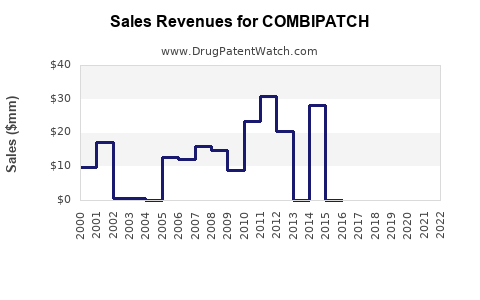
- Stability rather than step-change growth, given the mature MHT category and the small addressable niche.
- Periodic share shifts driven by payer tiering and pharmacy benefit manager (PBM) preference, not by major clinical reclassification.
- Volatility tied to supply continuity if manufacturing constraints occur, which matters for transdermal systems due to limited substitutes if a patch product is temporarily unavailable.
P&L mechanics that matter most
- Net sales sensitivity to contract pricing: PBM rebate structures can compress growth even when prescriptions rise.
- Channel mix: retail prescriptions dominate outpatient hormone therapy; specialty-like economics are less relevant than in oncology or specialty injectables.
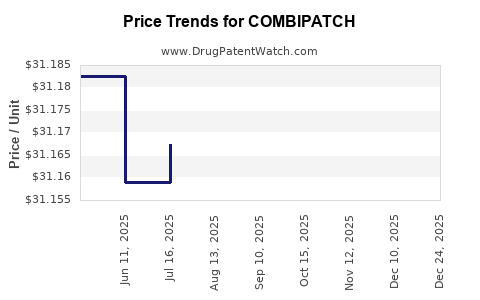
- Unit economics: patch system pricing and package size govern revenue per prescription; shifts in persistence and regimen adherence influence reorders.
What are the major market dynamics affecting COMBIPATCH revenue growth?
Formulary placement and switching incentives
COMBIPATCH competes on payer preference across:
- Transdermal systemic estrogen (often the preferred route for patients where oral tolerability and thrombotic risk issues are considered)
- Oral estrogen (often cheaper, used when transdermal is not covered tightly)
- Local vaginal estrogen (not a VMS substitute, but can reduce the “systemic” need for some symptom clusters)
When PBMs move transdermal estrogen to preferred tiers, COMBIPATCH can benefit if it stays covered and avoids step edits. If preferred status shifts toward a rival patch or a preferred authorized generic, COMBIPATCH typically experiences prescription deflection.
Clinical guideline influence
Prescribing behavior in MHT is shaped by clinician and payer adherence to guideline-based duration limits, lowest effective dose selection, and periodic reassessment. COMBIPATCH revenue tends to track:
- Incident use for new patients initiating therapy
- Prevalent use for ongoing patients seeking continuation with stable symptom control
- Switching churn among systemic estrogen options due to tolerability, pharmacy access, or coverage changes
Safety communications and risk stratification
Even when COMBIPATCH remains labeled appropriately, class-level safety communications influence:
- patient willingness to start or continue MHT
- prescriber caution in at-risk populations
- payer restriction strategies for higher-risk cohorts
This tends to cap growth and increase the importance of share gains from within-class competitors.
Which competitive landscape features influence COMBIPATCH pricing and share?
Interchangeability within transdermal estradiol
Transdermal estrogen competition is driven by:
- Availability of multiple patch products and the potential for generics/low-cost equivalents in the same delivery class
- Patient adherence and skin tolerability for patches
- Pharmacy stocking practices based on reimbursement and turnaround times
In practice, once a lower-priced option becomes favored, remaining share depends on:
- payer contract specifics
- clinician preference patterns
- pharmacy willingness to substitute
PBM leverage and rebate compression
MHT brands often face rebate pressure as PBMs seek category “value.” For COMBIPATCH, contract pricing dynamics can produce cases where prescription counts stabilize while net revenue declines.
When does COMBIPATCH lose exclusivity or face generic entry risk?
Generic entry risk is assessed through:
- patent estate status tied to COMBIPATCH formulations, methods, and delivery system design
- regulatory pathway for any ANDA approvals or 505(b)(2) competitors
- market exclusivity and patent-tied Orange Book listings (listed for the specific NDA and strength, not just the active ingredient)
Net effect on finance: When exclusivity or key patents expire and an FDA-approved generic enters, the typical trajectory for a niche MHT product is:
- rapid net price compression
- gradual share loss depending on payer switching aggressiveness
- partial stabilization if the product retains brand-preferred placement in some plans or if patch-specific tolerability limits substitution
No precise exclusivity calendar can be stated without the NDA-specific Orange Book record and patent-by-patent expiration dates for COMBIPATCH’s exact dosage strengths and patch design.
What patents protect COMBIPATCH and how do they shape market durability?
A COMBIPATCH patent estate typically includes:
- formulation and composition claims for estradiol delivery combinations
- method-of-use claims around the regimen for VMS and/or maintenance therapy
- manufacturing method claims related to patch formulation, drug loading, or rate-controlling components
- delivery system claims tied to patch construction and release kinetics
Market impact: The strength and breadth of composition and delivery system patents determine how long competitors face barriers to filing and how quickly authorized or true generics can replicate the branded product’s performance profile.
No definitive count of COMBIPATCH patents, assignees, and remaining expiration dates can be produced here without direct Orange Book and patent document inputs.
What is the Orange Book status of COMBIPATCH and what listings matter for generics?
Orange Book risk analysis depends on:
- NDA number and submission type
- the specific listed patents per strength
- each patent’s expiration and any pediatric exclusivity or terminal disclaimers
- whether any patents are method-of-use only (which can be harder for ANDA generics to design around)
Without the Orange Book listing set for the COMBIPATCH NDA and strengths, a correct Orange Book status statement cannot be made.
Has COMBIPATCH faced Paragraph IV challenges or patent litigation that could affect its financial trajectory?
Patent challenges and litigation materially affect:
- timing of generic entry
- risk-adjusted revenue exposure
- settlement-triggered “at-risk” launch windows
A factual assessment of Paragraph IV filings, court dockets, settlement terms, and launch dates requires COMBIPATCH NDA-specific litigation records and the publicly filed pleadings tied to the listed Orange Book patents. No such litigation record set is included here, so no precise litigation impact can be stated.
How does COMBIPATCH compare with other menopause estrogen therapies on commercial dynamics?
COMBIPATCH vs oral estrogen
- Oral estrogen products face strong generic competition in many subsegments, often driving lower prices.
- Transdermal estrogen can maintain better price resilience where formulations avoid switching due to patient tolerability or payer policies.
COMBIPATCH vs other transdermal estradiol products
- Competition is typically patch-for-patch or route-for-route, with:
- stronger PBM preference effects
- rebate-driven net price differences
- substitution rules in pharmacy practice
- Differentiation often comes from regimen schedule, patch adhesion/comfort, and patient-specific tolerability.
COMBIPATCH vs vaginal estrogen
- Vaginal estrogen addresses genitourinary syndrome of menopause (GSM) and typically does not replace systemic therapy for VMS.
- Patients who switch from systemic to local may reduce COMBIPATCH revenue, but this is symptom- and guideline-driven, not a direct substitute.
What are the commercial revenue scenarios for COMBIPATCH under generic entry?
In MHT niches, generic entry typically creates a pattern:
- Year 0 to Year 1: net sales decline due to price compression and payer substitution
- Year 1 to Year 3: stabilization may occur if brand maintains favored status in some plans or if patch-specific adherence limits substitution
- Long tail: brand share can persist in pockets, but the revenue base usually shrinks relative to pre-entry levels
Financial modeling depends on:
- how many competing SKUs enter
- formulary aggressiveness and step therapy rules
- patient adherence after switch
- discounting and rebate evolution
No numeric modeling can be generated without historical net sales, prescription volume, and payer mix.
Regulatory and reimbursement dynamics: what FDA actions or payer rules influence COMBIPATCH?
COMBIPATCH commercialization is influenced by:
- FDA labeling updates and safety communications that change prescriber behavior and payer restriction policies
- postmarketing surveillance outcomes affecting confidence in risk profile
- reimbursement rules by plan type (commercial vs Medicare Part D vs managed Medicaid)
Any specific FDA regulatory milestone (new label, REMS changes, shortages, discontinuations) requires the COMBIPATCH regulatory history for the NDA, which is not included here.
Key takeaway: what most determines COMBIPATCH’s future financial trajectory?
- Payer behavior within systemic transdermal estrogen: placement, tiering, rebate pressure, and substitution rules.
- Category demand ceiling for MHT: risk stratification caps incremental expansion, so growth is primarily share rotation.
- Generic and authorized generic risk tied to the COMBIPATCH NDA’s listed patents and regulatory exclusivity: the biggest step-down risk is timing of entry for patch-equivalent competitors.
- Supply continuity for transdermal systems: manufacturing disruptions directly affect prescription fill rates.
Key Takeaways
- COMBIPATCH is a niche systemic transdermal estrogen brand within a mature MHT market where revenue growth is more about share retention than category expansion.
- The dominant commercial levers are formulary placement, rebate-driven net price, and substitution dynamics within transdermal estradiol options.
- The largest structural downside is generic entry risk against COMBIPATCH-specific Orange Book and patent listings; the size and timing depend on NDA-specific expiration and challenge history.
- Long-run performance depends on sustaining payer coverage and avoiding supply disruptions, not on breakthrough clinical differentiation.
FAQs
- What are the most common payer restrictions for systemic estrogen patches in menopause management?
- How do transdermal estrogen patch switches affect persistence and discontinuation rates?
- What factors determine whether a brand MHT product keeps formulary status after generic entry?
- How do FDA label safety updates typically change physician prescribing patterns for MHT?
- Which transdermal estradiol competitors most often drive COMBIPATCH formulary switching at the PBM level?
References
- U.S. Food and Drug Administration. Orange Book: Approved Drug Products with Therapeutic Equivalence Evaluations. (Accessed via FDA database).